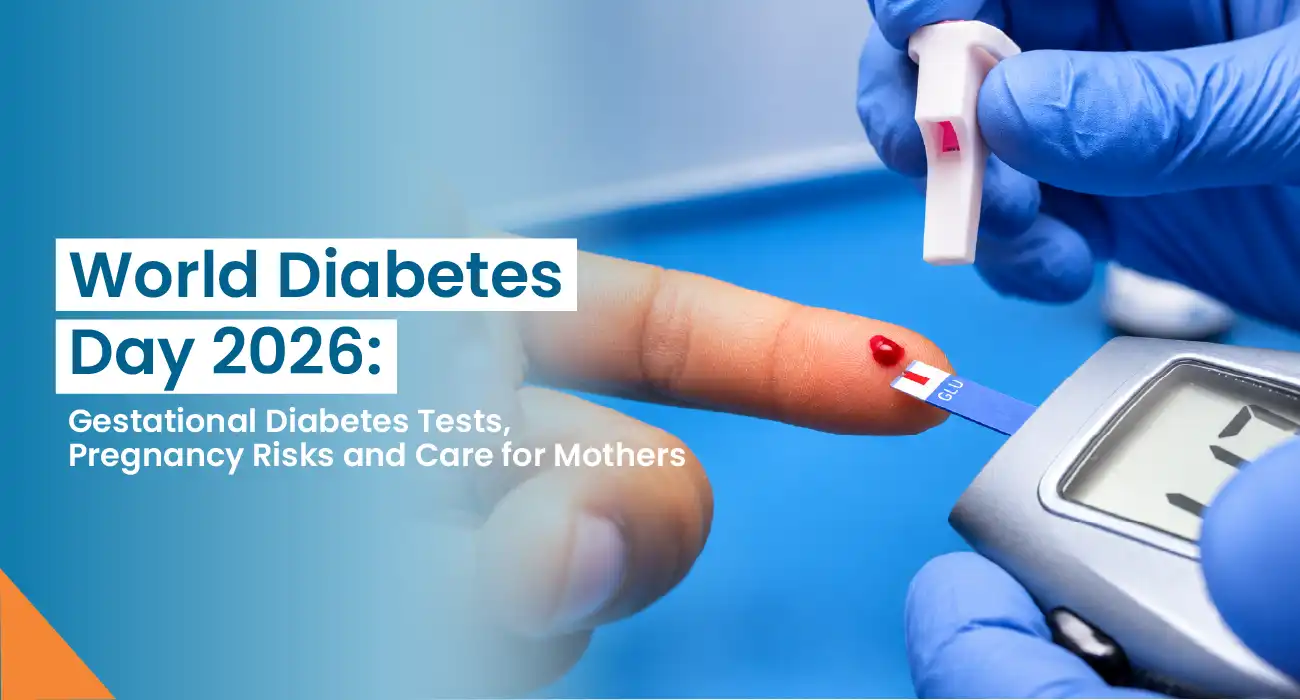
World Diabetes Day 2026: Gestational Diabetes Tests, Pregnancy Risks and Care for Mothers
11/13/2026
World Diabetes Day is an international campaign observed every year on 14 November to highlight the importance of timely action to diagnose diabetes early and reduce risk. In 2026, the campaign focuses on “Early Action on Diabetes,” emphasising why timely diagnosis and access to quality healthcare matter.
One important aspect of diabetes awareness is gestational diabetes (GD or GDM, a type of diabetes that develops particularly in pregnancy when blood sugar levels get too high (hyperglycaemia). A gestational diabetes test is usually recommended between 24 and 28 weeks of pregnancy to determine the condition and help avoid complications for both the mother and baby. Women with certain risk factors may require screening earlier.
This World Diabetes Day 2026, let's understand the tests, pregnancy risks and care options every expectant mother should know about gestational diabetes.
What Is Gestational Diabetes (GD or GDM)?
Gestational diabetes mellitus (GDM) is a type of diabetes (high blood sugar) that occurs only during pregnancy. It often has no symptoms, or they may be mild, such as being thirstier than normal or having to urinate more frequently. That’s why early screening tests become crucial for timely management.
But Why Does This Happen?
During pregnancy, the placenta releases hormones that naturally increase insulin resistance. This helps ensure that the growing baby receives enough nutrients. However, when your pancreas cannot produce sufficient insulin to manage this increased resistance, blood sugar levels rise.
What is insulin resistance?
Insulin helps move glucose from your blood into the cells so the body can utilise it for energy. Insulin resistance happens when cells in your muscles, fat and liver don’t respond to insulin as they should. As a result, glucose starts building up in the bloodstream.
Think of insulin as a key that helps glucose enter your body's cells, where it is used for energy. During pregnancy, placental hormones can make the locks on these cells less responsive to that key. When the pancreas cannot produce enough additional insulin to overcome this resistance, blood sugar levels rise, potentially leading to gestational diabetes.
According to clinical research, gestational diabetes affects approximately one in six live births worldwide, making it an important maternal health concern.
Who Is at Risk of Developing Gestational Diabetes?
Common risk factors include:
- Being overweight or having obesity before pregnancy.
- Having a family history of type 2 diabetes.
- Having gestational diabetes during a previous pregnancy.
- Polyendocrine metabolic ovarian syndrome (PMOS), formerly known as polycystic ovary syndrome (PCOS).
- Having high blood pressure or cardiovascular disease.
- Having prediabetes or higher-than-normal blood glucose levels.
- Having a history of delivering a baby weighing 4 kg or more.
- Being physically inactive.
- Being of certain higher-risk ethnic backgrounds, including South Asian ancestry.
Gestational diabetes can develop in any pregnancy, even if a woman has never experienced high blood sugar before. However, the above-mentioned factors can increase the likelihood of developing this condition.
Note: Having one or more risk factors does not necessarily mean you will develop gestational diabetes. However, discussing your medical and family history with your obstetrician can help determine whether you need earlier screening.
What Are the Symptoms of Gestational Diabetes?
One of the biggest challenges with gestational diabetes is that it often does not cause noticeable symptoms. Many women discover the condition only after undergoing a routine blood sugar test during pregnancy.
When symptoms do occur, they may include:
- Increased thirst.
- Frequent urination.
- Unusual tiredness.
- Nausea.
However, these symptoms can also occur during an otherwise normal pregnancy. Therefore, you should not rely on symptoms alone to determine whether you have gestational diabetes.
Remember: Even if you feel completely healthy, do not skip your recommended gestational diabetes screening.
What Is a Gestational Diabetes Test and When Is It Done?
Doctors generally recommend screening between 24 and 28 weeks because pregnancy-related insulin resistance becomes more pronounced during this period.
Depending on the healthcare provider's chosen protocol, screening may involve a one-step or two-step testing approach.
1. Glucose Challenge Test (GCT) (Glucose Screening Test or a One-hour Glucose Tolerance Test)
The glucose challenge test is commonly used as the first step in the two-step screening approach.
During this test:
- You drink a glucose-containing sweet liquid.
- You wait for approximately one hour.
- A healthcare professional collects a blood sample.
- Your blood glucose level is measured to check whether it is above the screening threshold.
Fasting is generally not required before this initial screening test.
If your result is higher than the recommended threshold, your doctor may ask you to undergo a more detailed glucose tolerance test.
2. Oral Glucose Tolerance Test (OGTT)
An oral glucose tolerance test measures how your body processes glucose over a longer period.
In the two-step approach, a 100-gram, three-hour OGTT may be recommended after an abnormal glucose challenge test.
The procedure generally involves:
- Fasting for at least eight hours before the test.
- Providing an initial blood sample.
- Drinking a glucose solution.
- Providing additional blood samples at one-, two- and three-hour intervals.
In a separate one-step approach, a 75-gram, two-hour OGTT is used to screen and diagnose gestational diabetes in a single visit.
The testing approach and diagnostic thresholds may differ depending on the clinical guidelines followed by your healthcare provider.
How Does Gestational Diabetes Affect the Mother and Baby?
Uncontrolled blood sugar levels during pregnancy can increase the risk of complications for both the mother and the developing baby.
Possible risks for the mother include:
- Preeclampsia (high blood pressure during pregnancy)
- Increased chances of C-section
- High risk of future type 2 diabetes
Possible risks for the baby include:
- Macrosomia (the baby may grow larger than expected, potentially complicating delivery)
- Neonatal hypoglycemia (the baby's blood sugar may drop after birth)
- Breathing difficulties
- Premature birth
- Future metabolic risks
Note: developing gestational diabetes does not mean these complications will definitely occur. Timely diagnosis, regular monitoring and appropriate treatment can significantly reduce these risks.
How Can You Manage Gestational Diabetes During Pregnancy?
Here are some important steps that doctors may recommend:
- Follow a balanced diet
- Stay physically active (if recommended otherwise)
- Monitor blood sugar regularly
- Take medication if prescribed
- Attend regular prenatal appointments
Remember this important point:
Managing gestational diabetes involves maintaining healthy blood sugar levels throughout pregnancy. Your doctor may recommend a combination of dietary changes, physical activity, glucose monitoring and medication when required.
FAQs About Gestational Diabetes
What Are the Normal Blood Sugar Levels During Pregnancy?
Doctors generally recommend the following blood sugar targets for women managing gestational diabetes:
| Testing time | Recommended blood sugar level |
| Before meals (fasting) | 95 mg/dL or less |
| One hour after meals | 140 mg/dL or less |
| Two hours after meals | 120 mg/dL or less |
Note: These are general management targets, not diagnostic thresholds for the glucose tolerance test. Your doctor may recommend individual targets depending on your pregnancy and medical condition.
Does Gestational Diabetes Go Away After Delivery?
Yes.
GDM usually goes away shortly after you give birth. However, having gestational diabetes increases your risk of developing type 2 diabetes in the future. Therefore, postpartum screening is important.
When Should You Consult a High-Risk Pregnancy Doctor in Jaipur?
If you have a history of gestational diabetes, PMOS, obesity, high blood pressure or a family history of diabetes, discuss your pregnancy risks with your obstetrician.
You should also seek medical advice if your blood sugar readings repeatedly exceed the targets provided by your healthcare team.
What is the Difference Between Gestational Diabetes Tests
The table below illustrates the difference in a simple manner:
| Test | What happens? | Purpose |
| Glucose Challenge Test (GCT) | Blood sugar is checked one hour after drinking glucose. | Initial screening. |
| 100-g OGTT | Blood samples are collected over three hours after fasting and drinking glucose. | Confirms diagnosis in the two-step approach. |
| 75-g OGTT | Blood glucose is evaluated over two hours after fasting and drinking glucose. | Screening and diagnosis in the one-step approach. |
Conclusion
This World Diabetes Day 2026, the message of early action reminds us that identifying diabetes at the right time can make a meaningful difference to long-term health.
Gestational diabetes may not always produce noticeable symptoms, but a timely gestational diabetes test can help identify high blood sugar levels before complications develop. Regular prenatal check-ups, balanced nutrition, physical activity and appropriate medical care can help mothers manage the condition and support their baby's healthy development.
Key Message of World Diabetes Day 2026
Gestational diabetes is manageable. Early screening, informed decisions and consistent medical support can help you experience a healthier pregnancy.
Disclaimer: This blog is for informational purposes only. For accurate information about gestational diabetes, contact your gynaecologist.
Medical reference sources for fact-checking:
- International Diabetes Federation (IDF). World Diabetes Day 2026–27: Early Action on Diabetes.
- Cleveland Clinic. Gestational Diabetes: Symptoms, Causes, Diagnosis and Treatment.
- StatPearls, National Center for Biotechnology Information (NCBI). Gestational Diabetes.
Written and Verified by: