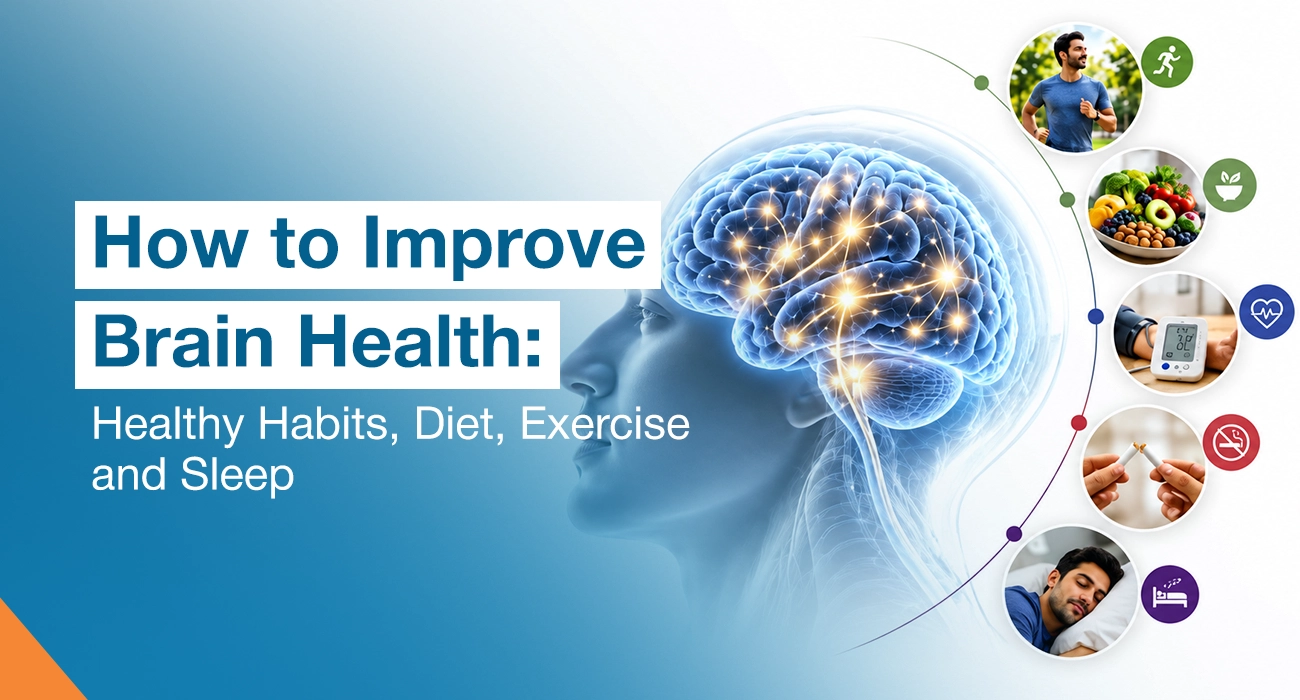
How to Improve Brain Health: Healthy Habits, Diet, Exercise & Sleep
10/15/2026
Can you improve your brain health? Yes.
And if you ask, what are the best brain health tips?
Simple daily habits, including staying physically active, eating a balanced diet, getting enough quality sleep (7 to 8 hours of sleep per night), keeping your blood pressure and blood sugar under control, challenging your mind (by engaging in activities like reading, solving crosswords, etc.), staying socially connected, and protecting your head, can support better brain health throughout your life.
Read this blog for a better understanding of brain health and ways to improve it.
Quick Overview: Ways to Improve Brain Health
Read the table below to get an idea of healthy brain habits:
| Healthy habit | How it supports brain health |
| Regular exercise | Supports blood flow, memory, mood and cognitive function. |
| Balanced diet | Provides nutrients needed for brain function. |
| Quality sleep | Supports memory, attention and emotional well-being. |
| Mental stimulation | Keeps the brain engaged and supports cognitive function. |
| Social connection | Supports emotional and cognitive well-being. |
| Managing blood pressure & sugar | Helps reduce risks linked to brain and blood-vessel health. |
| Avoiding tobacco and excessive alcohol | Helps protect brain function. |
| Preventing head injuries | Reduces the risk of brain injury. |
Read Also: Treatment Options For Neurological Disorders
What Is Brain Health?
Brain health refers to how well your brain functions across different areas such as cognitive, sensory, social-emotional, behavioural and motor domains. It enables a person to reach their full potential throughout life, irrespective of the presence or absence of disorders.
Brain health is much bigger than remembering names or solving puzzles.
It includes your ability to:
- Think and concentrate
- Learn and remember information
- Make decisions and solve problems
- Control movement and coordination
- Communicate with others
- Manage emotions
- Adapt to stress and changes
Read Also: Can Diet Prevent Your Alzheimers
How to Improve Brain Health?
Exercise regularly, eat a brain-friendly diet, prioritise quality sleep, engage in new skills, solve puzzles, play games, stay socially connected, manage underlying health conditions, avoid tobacco, and limit alcohol are some ways to improve your brain health.
1. Exercise Regularly
Physical activity does more than strengthen your heart, muscles and bones. It can also support thinking, learning, memory and emotional well-being.
Regular physical activity may also help lower the risk of cognitive decline and dementia.
For most adults, the general recommendation is at least 150 minutes of moderate-intensity physical activity each week, or 75 minutes of vigorous activity.
Try these simple options:
- Take a brisk walk after work.
- Use the stairs instead of the lift when appropriate.
- Dance to your favourite songs.
- Take active breaks if you sit for long periods.
- Walk your dog.
- Do household activities that keep you moving.
Note: Do not chase perfection; the key is consistency.
2. Eat a Brain-Friendly Diet
Your brain needs a steady supply of nutrients and energy to function in an effective manner.
Therefore, include brain-friendly food items in your meal, such as:
- Leafy green vegetables
- Other colourful vegetables
- Berries and other fruits
- Whole grains
- Nuts and seeds
- Fish
- Healthy unsaturated fats
- Lean sources of protein
You do not need to completely change your diet overnight.
Just start with one simple change, such as:
- Add vegetables to one more meal.
- Replace highly processed snacks with nuts or fruit.
- Choose whole grains more often.
3. Make Quality Sleep a Priority
Sleeping for humans, or any living being for that matter is similar to plugging in your phone to charge.
Poor or insufficient sleep can affect attention, mood, memory and daily functioning. Therefore, for adults, 7 to 8 hours of sleep per night is generally recommended.
To support better sleep:
- Keep a consistent sleep and wake schedule.
- Make your bedroom comfortable and quiet.
- Reduce screen use close to bedtime.
- Avoid heavy meals close to bedtime.
- Create a relaxing bedtime routine.
Talk to a healthcare professional if persistent snoring or poor sleep affects you.
4. Keep Your Brain Mentally Active
Just as physical activity maintains your body in shape, activities that engage your mind can keep your brain in shape. And those activities can help improve your brain function and memory.
Choose activities you genuinely enjoy so that you are more likely to continue them, such as:
- Reading
- Learning a new skill, drawing, learning an instrument, painting, etc
- Solving puzzles
- Playing games
To challenge your mind, you could learn a new language, take up gardening, try a new recipe, read about a topic you know little about or learn a new skill online
5. Stay Socially Connected
Your brain does not work in social isolation and loneliness.
Talking to friends, spending time with family, joining a community group or participating in activities you enjoy can support emotional well-being and social engagement. Believe it or not, these are the simplest ways to keep your brain in a healthy state.
6. Manage Blood Pressure, Blood Sugar & Cholesterol
Conditions such as high blood pressure, diabetes and high cholesterol can affect blood vessels and may raise the risk of problems that can affect brain function. That is why healthy brain habits also include taking care of your heart and metabolic health.
Follow your doctor’s advice and take prescribed medicines as directed if you have ongoing conditions such as high blood pressure, diabetes or high cholesterol.
7. Protect Your Head
Your brain is protected by your skull, but that does not make it immune to injury.
Therefore, wear appropriate protective gear when cycling, riding a motorcycle, playing certain sports or participating in activities where falls or head injuries are possible.
8. Avoid Tobacco and Limit Alcohol
Tobacco can harm overall cardiovascular health, while excessive alcohol consumption can affect brain function, memory, decision-making and coordination. Excessive drinking is a major risk factor for dementia.
If you drink alcohol, keeping consumption low is important. Also, avoid tobacco in all its forms.
FAQs About Brain Health
How do you keep your brain healthy?
Eat a balanced diet, exercise regularly, and stay mentally and socially active to keep your brain healthy.
Can brain health be improved at any age?
Yes.
Staying physically active, eating better, sleeping well, staying mentally engaged and managing health risks can contribute to optimal brain health.
Which foods are good for brain health?
Eating a balanced diet rich in omega-3 fatty acids, antioxidants, and healthy fats is good for brain health.
Top brain-healthy foods are fatty fish, leafy greens, berries, nuts and seeds, eggs, and dark chocolate.
Conclusion
Improving brain health does not need to be a complicated routine. Just start with the basics such as move regularly, eat a balanced diet, sleep well, keep your mind active, stay connected with people, protect your head and manage conditions that can affect your overall health.
However, if you notice persistent changes in your memory, movement, speech, balance or other neurological functions, speak with a doctor rather than trying to manage the symptoms on your own. The expert can assess your symptoms, recommend the right tests if required, and guide you towards appropriate treatment and care.
Disclaimer: This blog is for informational purposes only. Contact your healthcare professional for accurate information on how to improve brain health.
References
- https://www.who.int/health-topics/brain-health#tab=tab_1
- https://www.mayoclinic.org/healthy-lifestyle/healthy-aging/in-depth/brain-health-tips/art-20555198
- https://pmc.ncbi.nlm.nih.gov/articles/PMC10826122/
- https://www.cdc.gov/physical-activity/features/boost-brain-health.html
- https://www.health.harvard.edu/mind-and-mood/12-ways-to-keep-your-brain-young
Written and Verified by: