



Acute Coronary Syndrome: Symptoms, Causes, Treatment, and Prevention
08/25/2026
Acute coronary syndrome (ACS) refers to a group of conditions that involve sudden reduction in blood flow to the heart. There are three types of ACS: unstable angina, NSTEMI (non-ST-elevation myocardial infarction), and STEMI (ST-elevation myocardial infarction).
Symptoms typically occur without warning, even while you rest. If they occur, you might experience chest pressure or pain, shortness of breath, sudden excessive sweating, or a racing or pounding heart, with pain spreading to the arm, back, neck, jaw, or upper abdomen. If these symptoms appear suddenly, especially at rest, seek emergency medical help to avoid further complications.
What Is Acute Coronary Syndrome (ACS)?
ACS refers to a spectrum of clinical presentations ranging from those for ST-segment elevation myocardial infarction (STEMI) to presentations found in non–ST-segment elevation myocardial infarction (NSTEMI) or in unstable angina.
ACS is an umbrella term for conditions caused by a sudden reduction in blood flow to the heart, which is a medical emergency.
The 3 major clinical presentations are:
| Type of ACS | What happens | Heart-muscle damage |
| Unstable angina | There’s reduced blood flow in a coronary artery, but there is no evidence of myocardial infarction. | No detectable heart-muscle death |
| NSTEMI | There is partial blockage in a coronary artery. | Heart-muscle injury occurs |
| STEMI (It’s the most severe ACS) |
There is complete blockage in a coronary artery | Often extensive heart-muscle injury |
What Are the Symptoms of Acute Coronary Syndrome?
The most recognizable symptom is chest discomfort, but ACS symptoms typically occur without warning, even while you rest.
Common symptoms include:
- Pressure, squeezing, tightness, burning, aching, or pain in the chest
- Pain or discomfort spreading to the arm, shoulder, back, neck, jaw, or upper abdomen
- Shortness of breath
- Cold or heavy sweating
- Nausea or vomiting
- Dizziness or lightheadedness
- Fainting
- A racing or pounding heartbeat
- Unusual fatigue
- Indigestion-like discomfort
Causes of Acute Coronary Syndrome
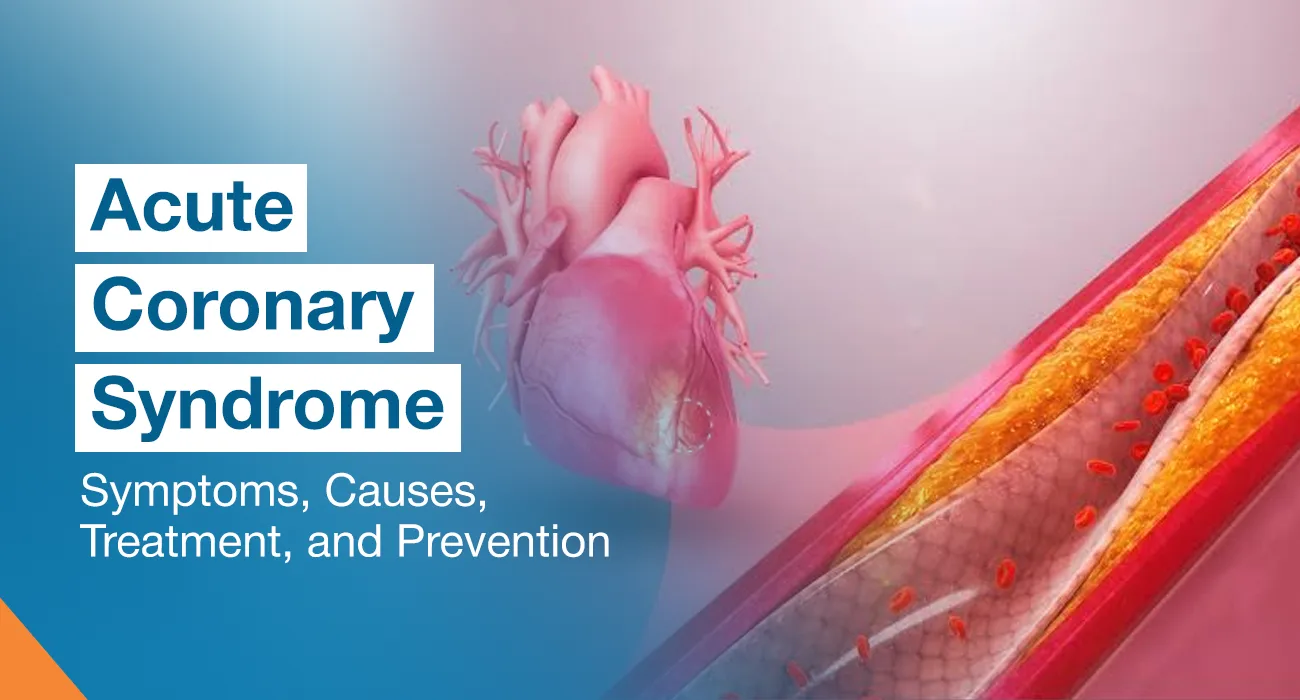
A blood clot in the coronary artery (major blood vessels that supply blood to the heart) causes ACS. This is usually because of cholesterol plaque rupturing inside the artery, but it can happen due to blood clots coming from other sources.
These clots partly or entirely block the space where blood can flow.
This means your heart can’t get adequate blood. If the blockage becomes severe, it can damage your heart muscle or even be fatal.
Here is the sequence of events to understand ACS in a better manner:
Plaque buildup → plaque disruption → blood clot → reduced coronary blood flow → oxygen shortage → heart-muscle injury or infarction
You’re more likely to develop ACS if you have the following risk factors:
- Older age.
- High blood pressure and blood cholesterol.
- Smoking or tobacco use.
- Low physical activity.
- An unhealthy diet.
- Obesity or overweight.
- Diabetes.
- Personal or family history of chest pain called angina, heart attacks, or stroke.
- History of high blood pressure, preeclampsia, or diabetes during pregnancy.
- Early menopause.
- Often eat foods high in sodium, sugar, or saturated fat.
- Have HIV or AIDS.
- Have ongoing autoimmune or inflammatory conditions
What Are the New 2026 ACS Guidelines Updates?
The 2025 Australian guideline, published in 2026, highlights several important developments:
| Guideline development | Why it matters |
| High-sensitivity troponin pathways | Can support faster and more precise risk assessment |
| Broader ECG recognition of acute coronary occlusion | Helps identify some dangerous occlusions that may not fit classic STEMI patterns |
| Timely primary PCI for STEMI | Emphasizes rapid restoration of blood flow |
| Intravascular imaging in selected NSTEACS PCI | Can improve assessment and procedure guidance |
| More tailored antiplatelet/anticoagulant strategies | Balances ischemic and bleeding risks |
| More detailed secondary prevention | Focuses on long-term risk reduction after ACS |
| Greater attention to cardiac rehabilitation and mental health | Addresses recovery beyond the hospital |
Acute Coronary Syndrome Treatment
Treatment depends on the following factors:
- type of ACS such as unstable angina, NSTEMI, STEMI,
- the location and severity of the blockage,
- complications, bleeding risk,
- and other medical conditions.
If you are wondering, “What is the initial treatment for acute coronary syndrome?” The immediate goals are to restore or improve coronary blood flow, limit heart-muscle damage, alleviate symptoms, and avoid complications.
Medicines used in ACS
- Antiplatelet medicines
- Anticoagulants
- Nitroglycerin
- Statins and other lipid-lowering medicines
- Beta-blockers
- ACE inhibitors or ARBs
- Fibrinolytic medicines in selected STEMI situations when timely PCI is not available
Procedures to treat ACS
- Percutaneous coronary intervention (PCI)
- Coronary artery bypass grafting (CABG)
FAQs
Q1: How can I prevent acute coronary syndromes?
A: You cannot always prevent ACS, especially due to factors such as age or family history. But there are some steps you can take to lower your risk:
- Don’t smoke or use tobacco products.
- Mediterranean diet and DASH diet.
- Limit alcohol use.
- Take high blood pressure, high cholesterol, or diabetes medicines exactly as prescribed.
- Stay physically active.
Q2: How is acute coronary syndrome diagnosed?
A: Doctors diagnose acute coronary syndromes using a physical examination, blood tests, and an EKG, which records your heart’s electrical activity.
Additional investigations may include:
- Echocardiography
- Coronary angiography
- CT coronary angiography
- Other cardiac imaging
- Stress testing
Conclusion
Acute coronary syndromes are time-sensitive medical emergencies, but with quick treatment, there’s a good chance you’ll be OK.
Therefore, call your local emergency number immediately if you develop:
- sudden or unexplained chest pressure,
- pain or tightness, particularly when it is accompanied by shortness of breath, sweating, nausea, dizziness, fainting, or pain spreading to the arm, back, neck, or jaw.
Many individuals live just as long as others their age who don’t have an ACS. You can improve your chances of survival by going to your follow-up visits and adhering to your treatment plan.