



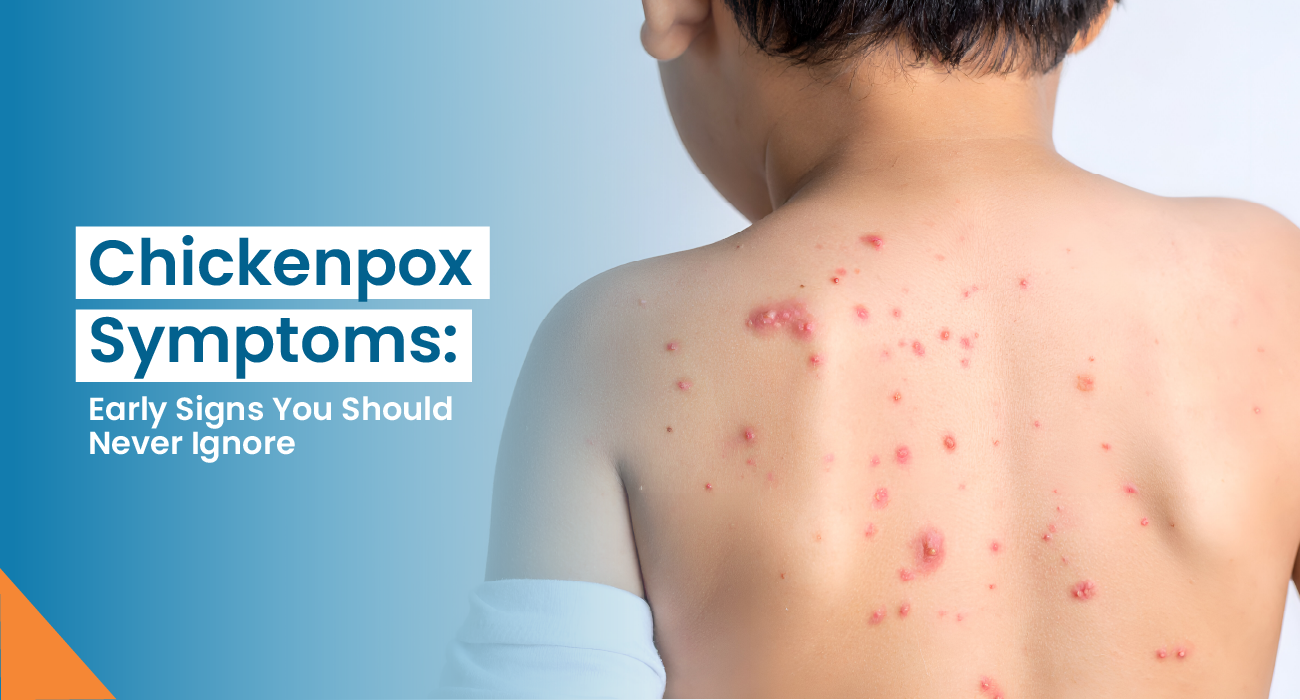
Chickenpox Symptoms: Early Signs You Should Never Ignore
10/06/2026
Chickenpox symptoms generally start with:
- fever,
- tiredness,
- headache,
- loss of appetite,
- and body aches
These symptoms are followed by an itchy red rash that turns into fluid-filled blisters.
The rash generally appears 10 to 21 days after exposure to a virus called varicella-zoster that causes chickenpox. The good news is, identifying the early signs (such as low-grade fever, feeling tired, headache, stomachache, a skin rash, etc.) and taking medical advice promptly can help lower complications, especially in adults, pregnant women, infants, and individuals with weakened immunity.
Quick Overview: Chickenpox Symptoms
Chickenpox symptoms are easy to see. Child doctors often can look at your child’s skin and know if they have chickenpox.
| Symptom | When It Appears | What to Watch For |
| Fever | 1-2 days before rash | Usually mild to moderate |
| Fatigue | Early stage | Weakness and low energy |
| Headache | Early stage | Often accompanied by fever |
| Loss of appetite | Early stage | Reduced food intake |
| Itchy rash | After fever | Starts on chest, back, and face |
| Fluid-filled blisters | Within 24 hours of rash | Extremely itchy |
| Scabs | 5-7 days later | Indicates healing |
Chickenpox is usually considered a childhood illness, but it can become serious in certain people. Early diagnosis, supportive care, and vaccination are the most effective ways to avoid these diseases from getting severe.
What Is Chickenpox?
Chickenpox is a very contagious infection caused by the varicella-zoster virus (VZV) that leads to itchy, blister-like skin rash. Chickenpox illness generally lasts about 4 to 7 days.
Before the availability of the first vaccine against chickenpox in 1995, almost every person got chickenpox as a toddler or young child. However, since the late 1990s, the rate of chickenpox has decreased by around 90%.
Chickenpox outbreaks can still occur, particularly among unvaccinated individuals.
For example, as per Kerala Health Department reports, more than 11,000 chickenpox cases were reported during the first few months of 2026, with over 900 cases from Ernakulam district alone. Doctors noted that while this can be seen as seasonal trends, vaccination and early treatment remain crucial for avoiding further complications.
Early Signs of Chickenpox
The early signs of chickenpox are:
- Mild to moderate fever
- Headache
- Body aches
- Fatigue
- Feeling generally unwell
- Loss of appetite
These symptoms may appear similar to the flu or a common viral infection, which makes its early diagnosis difficult. However, within one to two days, the characteristic rash begins to appear.
How Do I Know if My Rash Is Chickenpox?
You may identify the rash which is the hallmark of chickenpox symptoms.
The rash usually starts on:
- Chest
- Back
- Face
It then spreads to:
- Arms
- Legs
- Scalp
- Mouth
- Eyelids
- Genital area (in some cases)
The rash is intensely itchy which may consist of 250 to 500 blisters in case of severe infections.
What Are the Three Stages of Chickenpox?
There are 3 main stages of chickenpox that usually refer to the way the rash looks:
| Stage | Appearance | Duration |
| Stage 1 | Small red bumps (papules) | 1-2 days |
| Stage 2 | Fluid-filled blisters (vesicles) | 1-2 days |
| Stage 3 | Blisters burst and crust over | Several days |
| Stage 4 | Scabs fall off naturally | Around 1 week |
Interestingly, all the stages can exist simultaneously. This means you may notice new bumps while older blisters are already scabbing.
Which Day of Chickenpox is Most Contagious?
You might think that chickenpox spreads only after the rash develops.
But in reality, a person is contagious:
- 1 to 2 days before the rash
- Until every blister has crusted over
Who Is Most at Risk of Severe Chickenpox?
While primarily affecting children, varicella poses greater risks to:
- Pregnant women
- Adults
- Newborn babies
- People with diabetes
- Cancer patients
- Organ transplant recipients
- HIV patients
- Individuals taking immune-suppressing medications
Complications of Chickenpox:
- While many cases are mild, chickenpox can sometimes lead to serious complications including:
- Skin infections
- Pneumonia
- Encephalitis (brain inflammation)
- Dehydration
- Bloodstream infections
- Toxic shock syndrome
- Liver complications
- Rarely, fatal
How Is Chickenpox Diagnosed?
Identifying chickenpox is easy. Doctors often can look at your child’s skin and know if they have chickenpox.
In unusual or severe cases laboratory tests may be used, including:
- Blood tests
- PCR testing
- Fluid from skin lesions
How to Cure Chickenpox Quickly?
There is no instant cure or treatment for chickenpox.
Chickenpox treatment focuses on alleviating symptoms and preventing complications.
Treatment may include:
Home Care
- Drink plenty of fluids.
- Get adequate rest.
- Wear loose cotton clothing.
- Trim fingernails to prevent scratching.
- Take cool oatmeal baths.
- Apply calamine lotion for itching.
Medications
Doctors may recommend:
- Acetaminophen (Paracetamol) for fever
- Antihistamines for itching
- Antiviral medicines like Acyclovir for high-risk patients
The treatment for adults is similar to that in children. But your doctor may recommend an antiviral medication. Antiviral drugs can benefit adults who are at risk for severe symptoms or who have certain medical conditions.
Conclusion
If you ask “can chickenpox be prevented?” The answer is yes.
Vaccination is the best protection. Studies have observed that two doses prevent over 90% of chickenpox cases and almost all severe diseases.
Current recommendations for the chickenpox vaccination include:
- First dose: 12-15 months
- Second dose: 4-6 years
- Older children and adults without immunity should receive two doses.
Chickenpox can be more serious in adults. You should contact a healthcare provider right away if you believe you have chickenpox.
When Should You See a Doctor?
- Fever above 102°F (38.9°C)
- Difficulty breathing
- Persistent vomiting
- Confusion
- Severe headache
- Stiff neck
- Rash involving the eyes
- Pus-filled blisters
- Increasing redness or warmth around lesions
Vulnerable groups such as infants younger than three months, pregnant women, and immunocompromised people should contact a doctor as soon as symptoms appear.
When looking for chickenpox treatment in Jaipur, choose a qualified healthcare provider like those at Eternal Hospital who can:
- Confirm the diagnosis.
- Assess the risk of complications.
- Recommend appropriate treatment.
- Advise when it is safe to return to school or work.
- Discuss vaccination for family members who are not immune.
Do not self-prescribe any antibiotics unless recommended by the doctor, as chickenpox is caused by a virus rather than bacteria.
Disclaimer: This blog is for educational purposes. For accurate information about chickenpox symptoms and accurate treatment consult your doctor.
Written and Verified by:

Dr. Jugal Bihari Gupta
Senior Consultant - Internal Medicine & Director Clinical Research
Meet the doctor