



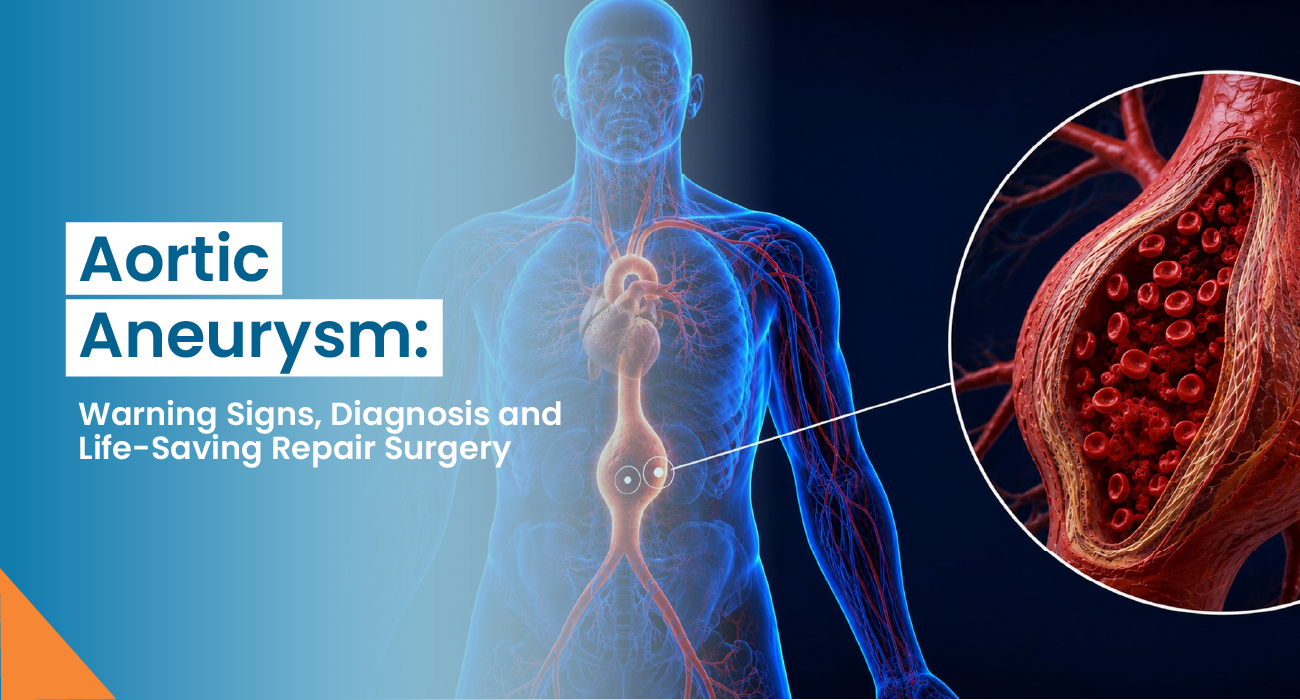
Aortic Aneurysm: Warning Signs, Diagnosis and Life-Saving Repair Surgery
10/07/2026
An aortic aneurysm is a bulge in the wall of your aorta, the main artery from your heart. The aorta is the body's largest artery, which carries oxygen-rich blood from the heart to the rest of the body.
The danger is not simply the presence of the bulge; as an aneurysm grows, the weakened aortic wall can tear or rupture, which can cause life-threatening internal bleeding or block the flow of blood from your heart to various organs.
One of the biggest challenges is that an aortic aneurysm may remain silent. When symptoms do occur, possible aortic aneurysm symptoms include:
- Chest pain or discomfort
- Back pain
- Abdominal pain
- Difficulty breathing
- Difficulty or painful swallowing
- A feeling of fullness after eating a small amount
- Swelling involving the neck, face, or arms
These symptoms depend largely on where the aneurysm is located and whether it is pressing on nearby structures. Doctors often discover these aneurysms during a routine checkup or screening.
If you experience any of the warning signs, consult a cardiothoracic surgeon in Jaipur. Early detection through appropriate imaging (CT scan, CT or MRI angiography, and ultrasound) and careful monitoring can make a major difference.
Modern aortic aneurysm treatment is also changing. The latest 2026 European Society for Vascular Surgery (ESVS) guidance emphasises endovascular treatment, such as TEVAR and fenestrated or branched repairs, when the individual's anatomy is suitable. Simultaneously, it stresses careful patient selection, high-volume specialist centres, quality monitoring and shared decision-making.
What Is an Aortic Aneurysm?
An aortic aneurysm is a bulge that occurs in the wall of the body's main artery, known as the aorta (which carries blood from the heart to the rest of the body).
As an aneurysm grows, the weakened aortic wall can tear or rupture, potentially causing life-threatening internal bleeding.
Aortic aneurysms can happen anywhere in the aorta. They may be tube-shaped or round.
Two major categories are:
| Type | Location | Common description |
| Abdominal aortic aneurysm (AAA) | Aorta passing through the abdomen | Aneurysm in the abdominal portion of the aorta |
| Thoracic aortic aneurysm (TAA) | Aorta passing through the chest | Aneurysm in the chest portion of the aorta |
Factors such as size, location, shape, rate of growth, and overall health of the individual all influence the risk and choice of treatment.
Some people are at higher risk of developing aortic aneurysms.
It occurs most often in people who:
- Smoke
- Are over 65 years of age
- Are male
- Have a family history of aortic aneurysms
- Have high blood pressure (hypertension)
Warning Signs of an Aortic Aneurysm
In many cases, a person doesn’t know they have an aortic aneurysm because it often doesn’t cause any symptoms until it ruptures (bursts).
As an aortic aneurysm grows, the following symptoms may appear:
- Difficulty breathing.
- Shortness of breath.
- Feeling full even after a small meal.
- Pain wherever the aneurysm is growing (could be in the neck, back, chest or abdomen).
- Painful or difficult swallowing.
- Swelling of the arms, neck, or face.
Symptoms of a ruptured aneurysm can happen suddenly and include:
- Dizziness or lightheadedness.
- Rapid heart rate.
- Sudden, severe chest, abdominal or back pain.
If these sudden symptoms occur, emergency medical attention is needed immediately. Do not wait for the pain to settle on its own.
How Is an Aortic Aneurysm Diagnosed?
Finding an aortic aneurysm before it ruptures gives you the best chance of recovery.
Depending on the suspected location and clinical situation, doctors may use:
- Ultrasound
- CT scan
- CT angiography
- MRI angiography
Aortic Aneurysm Treatment: Monitoring, Medicines & Repair
Treatment generally falls into the following three broad categories.
1. Monitoring
If you have an unruptured aortic aneurysm, your doctor will monitor your condition closely. If you have risk factors for developing an aortic aneurysm, your doctor may also recommend regular screenings.
The goal is to track the aneurysm’s growth and identify any changes early.
2. Medical & Lifestyle Management
Depending on your condition, doctors may recommend treatment to control factors that increase stress on the aortic wall.
This can include the management of:
- High blood pressure
- High cholesterol
- Cardiovascular risk factors
Following healthy lifestyle measures can also be an integral part of management:
- Maintaining a healthy weight
- Exercising appropriately
- Following a heart-healthy diet
- Stopping tobacco use
3. Aortic Aneurysm Surgery or Endovascular Repair
When an aneurysm becomes sufficiently large, symptomatic, or otherwise high-risk, repair may be recommended.
There are 2 broad approaches:
| Treatment | How it works | Key feature |
| Open repair | The diseased section is repaired and a graft is surgically placed | Major operation with a longer recovery |
| Endovascular aneurysm repair (EVAR) | A stent-graft is delivered through the blood vessels using a catheter | Minimally invasive approach when the anatomy permits |
Endovascular aneurysm repair is also called thoracic endovascular aneurysm repair (TEVAR) or fenestrated endovascular aneurysm repair (FEVAR).
A cardiothoracic surgeon in Jaipur makes treatment decisions that balance:
Risk of the aneurysm + risk of the procedure + expected benefit + patient's goals
Conclusion
Taking steps such as eating a heart-healthy diet, exercising regularly, maintaining a healthy weight, quitting smoking, and avoiding tobacco products can help improve your heart health and may help prevent aortic aneurysms from developing or getting worse.
An aortic aneurysm can remain silent until it becomes dangerous, which makes awareness, appropriate screening and timely imaging important for people at increased risk. Talk to your doctor about lifestyle changes and treatment options to help you live a healthy and fulfilling life.
Disclaimer: This blog is for informational use only. For accurate information regarding aortic aneurysm, consult your doctor.
Written and Verified by:
Dr. Ajeet Bana
Chairman - Cardiac Sciences and President EHCC Network
Meet the doctor