



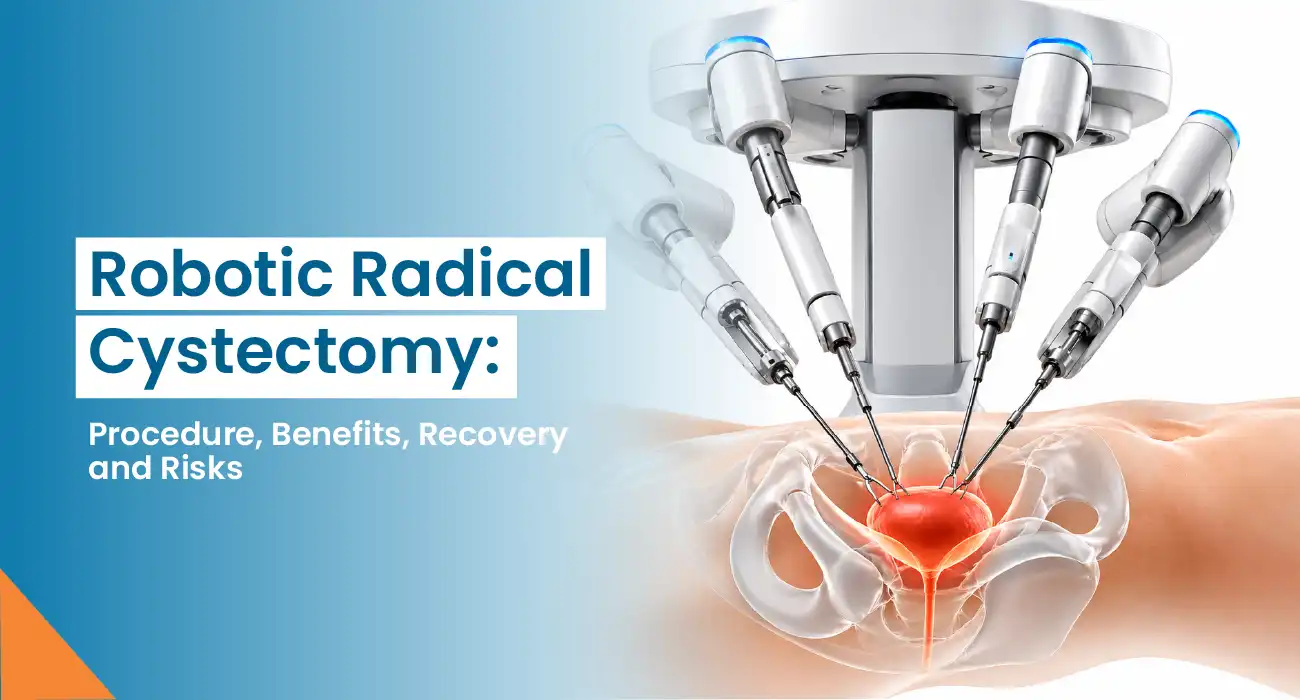
Robotic Radical Cystectomy: Procedure, Benefits, Recovery, and Risks
10/31/2026
Robotic radical cystectomy is a minimally invasive procedure to remove the whole bladder, most commonly to treat bladder cancer that has invaded the bladder muscle or carries an increased risk of spreading.
Using robotic-assisted surgical instruments, a surgeon operates via small incisions and removes the bladder before creating a new passage for urine to leave the body. Based on the person's cancer and anatomy, nearby lymph nodes and other organs may also need to be removed. However, not everyone is an eligible candidate for the procedure, and recovery varies from person to person.
Read this blog to understand how robotic radical cystectomy works, its benefits, possible risks, and recovery timeline to make an informed decision with your urologist.
What is Radical Cystectomy (RC)?
Radical cystectomy (RC) is the removal of the whole bladder (a hollow, stretchy organ in the lower part of the abdomen that stores urine before it leaves the body via the urethra). This most often includes removal of the prostate and seminal vesicles or the uterus (womb), ovaries, fallopian tubes and part of the vagina.
Read Also:
What is Robotic Radical Cystectomy
Robotic radical cystectomy involves the use of robotic-assisted surgical instruments. A surgeon operates through small incisions and removes the bladder before creating a new way for urine to leave your body.
Doctors may recommend robotic-assisted cystectomy for muscle-invasive bladder cancer. It may also be considered for certain high-risk bladder cancers that have not responded to other treatments or when the disease's features make bladder removal the most appropriate option.
However, the exact treatment plan depends on the stage and location of the cancer, overall health, kidney function, previous treatments, and personal preferences. In some cases, chemotherapy is recommended before surgery.
Note: Not every individual with bladder cancer requires their bladder to be removed. The final decision follows a detailed evaluation by the treating cancer team.
When Radical Cystectomy May Be Considered?
Radical cystectomy with urinary diversion is considered the standard treatment for muscle-invasive bladder cancer (MIBC). It may also be considered if the high-risk cancer persists or returns despite other treatments or the removal of the bladder offers an appropriate chance of controlling the disease.
How Does the Robotic Radical Cystectomy Procedure Work?
The exact robotic radical cystectomy procedure may vary, but it can include the following general steps:
Step 1: Preparation and Anaesthesia
Before surgery, the medical team thoroughly reviews imaging, laboratory results, medications, and overall fitness for anaesthesia. All the instructions regarding eating, drinking, and medicines are given to the person before the operation.
Step 2: Small Incisions and Robotic Access
The surgeon makes several small incisions in the abdomen and inserts a camera and specialised instruments. These instruments allow controlled movements in the pelvis.
Step 3: Bladder and Lymph Node Removal
The surgeon removes the bladder and, when indicated, nearby lymph nodes to assess and treat possible cancer spread.
In men, the prostate and seminal vesicles are commonly removed as part of a standard radical procedure.
In women, removal may involve the uterus, ovaries, fallopian tubes, or part of the vagina, based on the cancer and the planned operation.
Step 4: Urinary Diversion
Because the bladder is no longer there to store urine, the surgeon creates another route for urine to leave the body. This process is known as urinary diversion.
What Are the Types of Urinary Diversion After Cystectomy?
Types of urinary diversion are:
- Ileal Conduit
- A surgeon makes a new tube from a piece of intestine. This allows the kidneys to drain and urine to exit the body via a small opening called a stoma.
- Neobladder Reconstruction (Also Known as Orthotopic Neobladder Reconstruction)
- A surgeon uses a piece of intestine to create a new bladder. This new bladder allows a person to urinate voluntarily and control when to pee.
- Continent Cutaneous Reservoir (Also Known as Indiana Pouch)
- An Indiana pouch is a reservoir that a person uses to store and remove urine (pee) from their body. It is emptied through a small abdominal opening using a catheter.
The experts decide the most suitable option of urinary diversion based on your health, kidney function, cancer treatment, lifestyle, and personal preference.
Step 5: Closure and Early Monitoring
The surgical team completes the procedure, closes the incisions, and transfers the patient to recovery for monitoring. The duration of surgery and hospital stay varies with the surgical plan, individual health, and any complications.
Note: The robot does not operate independently; the surgeon directs robotic instruments from a console throughout the procedure.
What Are the Benefits of Robotic Radical Cystectomy?
Compared with open surgery, robotic cystectomy may offer the following potential benefits:
- Smaller incisions
- Less blood loss
- Less pain and discomfort after surgery
- A shorter hospital stay
- Faster early recovery
What Are the Risks and Complications of Robotic-Assisted Cystectomy?
A robotic cystectomy is a major surgery, and any major surgery carries risks such as:
- Bleeding.
- Blood clots in the legs or lungs.
- Bacterial infection
- Organ damage
- Anaesthesia reactions, including fatigue, headache, sore throat and nausea/vomiting
- Bowel injury, blockage, or delayed return of bowel function.
- Urine leakage or problems where the urinary tract is reconnected.
- Changes in kidney function or electrolyte levels.
- Infertility, or changes in body image, depending on the operation.
For some males, bladder removal procedures cause sexual side effects. Some may have trouble getting and maintaining erections.
How Long Does It Take to Recover From Robotic Bladder Surgery?
The recovery may vary from person to person based on individual factors. In general, full physical recovery may take about 6 to 8 weeks.
FAQs About Robotic Radical Cystectomy
Is robotic radical cystectomy better than open traditional surgery?
Not for everyone.
Both approaches have their advantages and disadvantages. The appropriate choice depends on individual factors.
Can you live a normal life without a bladder?
Yes.
Many individuals can live a comfortable life after making lifestyle adjustments.
Does robotic radical cystectomy cure bladder cancer?
A cure cannot be guaranteed.
Robotic bladder cancer surgery can be an important part of treatment, especially for muscle-invasive bladder cancer. It can speed up recovery, reduce pain, and improve quality of life.
Conclusion
Robotic radical cystectomy integrates bladder removal with robotic-assisted surgical techniques to treat selected patients with bladder cancer. It offers benefits such as smaller incisions and potentially less blood loss. But the procedure remains major surgery, and not everyone is eligible for it. Therefore, it is important to discuss all the potential benefits and risks before making a final decision.
Disclaimer: This blog is for informational purposes only. For accurate information about robotic radical cystectomy, contact your doctor.
Medical reference sources for fact-checking:
- Mayo Clinic. Cystectomy (bladder removal)
- Radical cystectomy: a review of techniques, developments and controversies. PubMed Central
- Cleveland Clinic. Robotic Cystectomy
- Lee M, Eun DD. Robotic Radical Cystectomy of the Bladder. StatPearls, NCBI Bookshelf
Written and Verified by:

Dr. Ravi Gupta
HOD & Director - Urology and Renal Transplant Surgery
Meet the doctor