



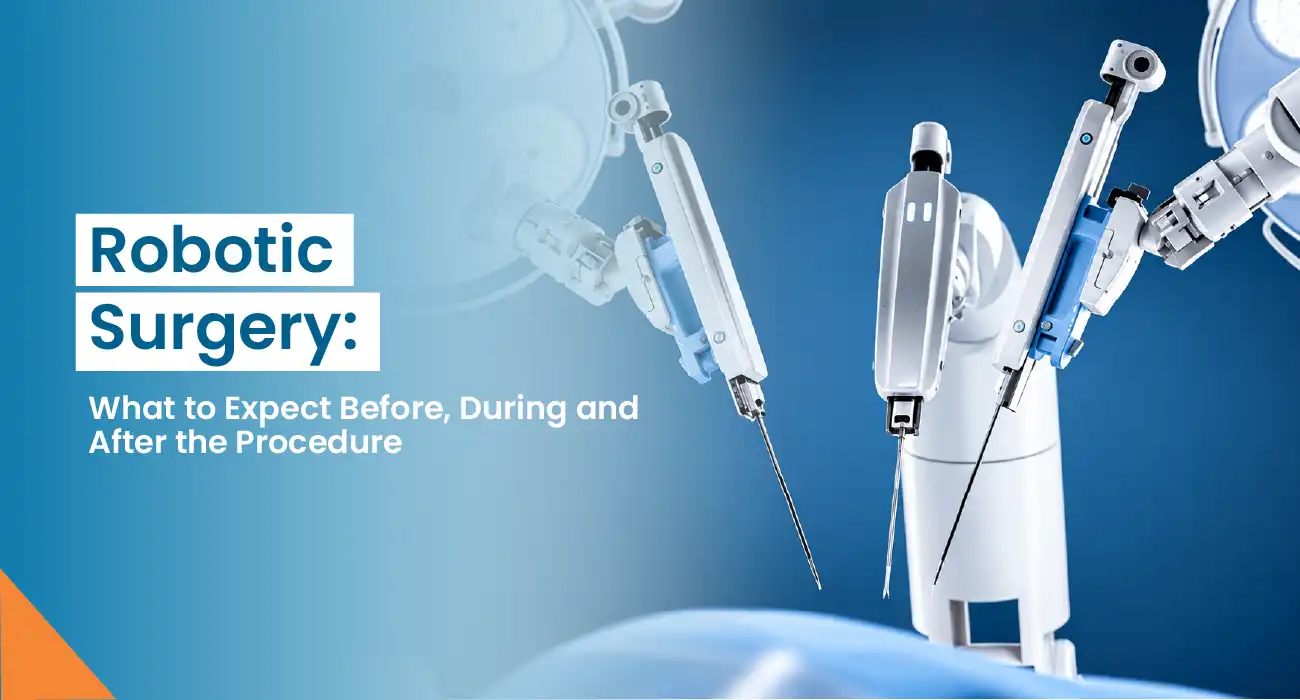
Robotic Surgery: What to Expect Before, During and After the Procedure
10/31/2026
Robotic surgery (also known as robot-assisted surgery or robotically-assisted surgery) is a type of minimally invasive surgery that consists of three main parts:
- Robotic arms that hold tiny instruments.
- A high-definition camera to give the surgeon enhanced, magnified, 3D views of the surgical area.
- A surgical console where the surgeon controls the instruments and the camera’s every move.
This means a surgeon uses a specialised robotic system to perform an operation with precision and control.
Robot assisted surgery may be used for selected procedures involving the heart, kidneys, prostate, uterus and other organs. Based on your condition and type of surgery, the surgery may involve smaller incisions, less blood loss and a shorter hospital stay compared to some traditional open surgeries.
However, not everyone is an eligible candidate for robotically assisted surgery, and recovery varies from person to person.
If your doctor has recommended robotic-assisted surgery, read this blog to understand what happens before, during and after the procedure. Being aware of the procedure helps you prepare and feel more confident.
Read Also: When Is Robotic Hysterectomy Recommended? Conditions & Eligibility Surgery
How Does Robotic Surgery Work?
Here is how the robotic system generally works:
- Small incisions: The surgeon makes small openings to insert a camera and surgical instruments.
- Magnified vision: A high-definition camera gives a detailed view of the operating area.
- Controlled movements: The surgeon moves the instruments using controls at a console.
- Precise instrument handling: The instruments can provide a range of movement. This helps the surgeon work in confined spaces.
Robotic surgery doesn’t replace your surgeon. Your surgeon will guide and control the instruments throughout the operation.
In simple words, robotic surgery integrates the surgeon's skills with specialised instruments and a camera system.
Alternative Names
Robot-assisted surgery; Robotic-assisted laparoscopic surgery; Laparoscopic surgery with robotic assistance
Read Also: Robotic Orthopedic Surgery: Why It Offers Better Precision & Faster Recovery
What to Expect Before Robotic Surgery
Before robot-assisted surgery, your doctor will assess your overall health, explain the treatment plan and guide you on how to prepare.
Here is what you can expect before the surgery:
- Going for medical evaluation and consultation.
- Following medication and fasting instructions.
- Depending on the operation, you may be admitted on the day of surgery or earlier.
Read Also: Robotic Heart Surgery in India: Benefits of da Vinci Xi for Complex Cardiac Conditions
What Happens During a Robotic Surgery Procedure?
The exact steps depend on the type of operation; however, most robotically assisted surgery involves following a similar sequence.
Step 1: Anaesthesia
Most robotic surgeries are performed under general anaesthesia, which means you will be asleep during the operation.
Step 2: Small Incisions
Once you are prepared, the surgeon makes small incisions in the required area. A camera and specialised instruments are inserted through these openings.
The number and size of the incisions depend on the procedure.
Step 3: The Surgeon Controls the Robotic System
The surgeon sits at a console and views the surgical area through a magnified camera. By moving the console controls, the surgeon directs the robotic instruments.
Let's understand with an analogy
Imagine using a highly precise tool to repair a small part inside a machine. A detailed view and controlled movements help you work carefully in a restricted space. Robotic systems offer similar assistance during selected surgical procedures.
Step 4: The Surgical Procedure Is Performed
The surgeon carries out the planned operation using the robotic instruments. The aim may be to remove diseased tissue, repair an organ or treat a specific medical condition.
The surgical team monitors the patient throughout the procedure.
Step 5: The Instruments Are Removed
After completing the operation, the surgeon removes the instruments and closes the incisions. You are then moved to the recovery area, where medical staff monitor you as you wake from anaesthesia.
What to Expect After Robotic Surgery
After the procedure, depending on the procedure type and your overall health, you may:
- Get out of bed soon after the anaesthesia wears off.
- Be encouraged to walk gently as soon as it is safe to do so.
- Be able to have food within a few hours of surgery.
- Go back home once you are completely fit.
FAQs About Robotic Surgery
How long does robotic surgery recovery take?
Recovery will be fastest among all surgical modalities, with less chances of having surgical complications. People may need 2 to 4 weeks for a return to light activities and desk work, and 6 to 8 weeks for a full recovery. However, the duration depends on the type and complexity of the operation.
What are the potential benefits and risks of robotic surgery?
Compared to traditional open surgery, robotically-assisted surgery offers benefits like:
- Less pain during recovery.
- Lower risk of infection.
- Reduced blood loss.
- Magnified, three-dimensional visualisation.
- Controlled instrument movements.
- Shorter hospital stays.
- Smaller scars.
There are less chances of having surgical complications, as robotic surgery provides much more surgical precision and safety.
Does the robot perform the surgery on its own?
No.
The robot doesn't perform surgery independently; your surgeon has full control of the robotic system.
Is robotic surgery safe?
Yes, if you are an eligible candidate and the surgery is performed by appropriately trained surgical teams.
Conclusion
Think of robotic surgery like driving a car with advanced navigation and precision controls. The technology helps the driver, but the driver remains responsible for every decision. Similarly, the robotic system assists the surgeon, who remains in control throughout the operation.
If your doctor has considered you a suitable candidate, minimally invasive robotic surgery may offer benefits such as smaller incisions, less blood loss and a potentially shorter recovery period. Therefore, know what to expect before, during and after the procedure to help you prepare and feel more confident about your treatment plan.
Disclaimer: This blog is for informational purposes only. Contact your healthcare professional for accurate information on robotic surgery.
Medical reference sources for fact-checking:
- https://my.clevelandclinic.org/health/treatments/22178-robotic-surgery
- https://www.mayoclinic.org/tests-procedures/robotic-surgery/about/pac-20394974
- https://medlineplus.gov/ency/article/007339.htm
- https://pmc.ncbi.nlm.nih.gov/articles/PMC10445506/
Written and Verified by:
