



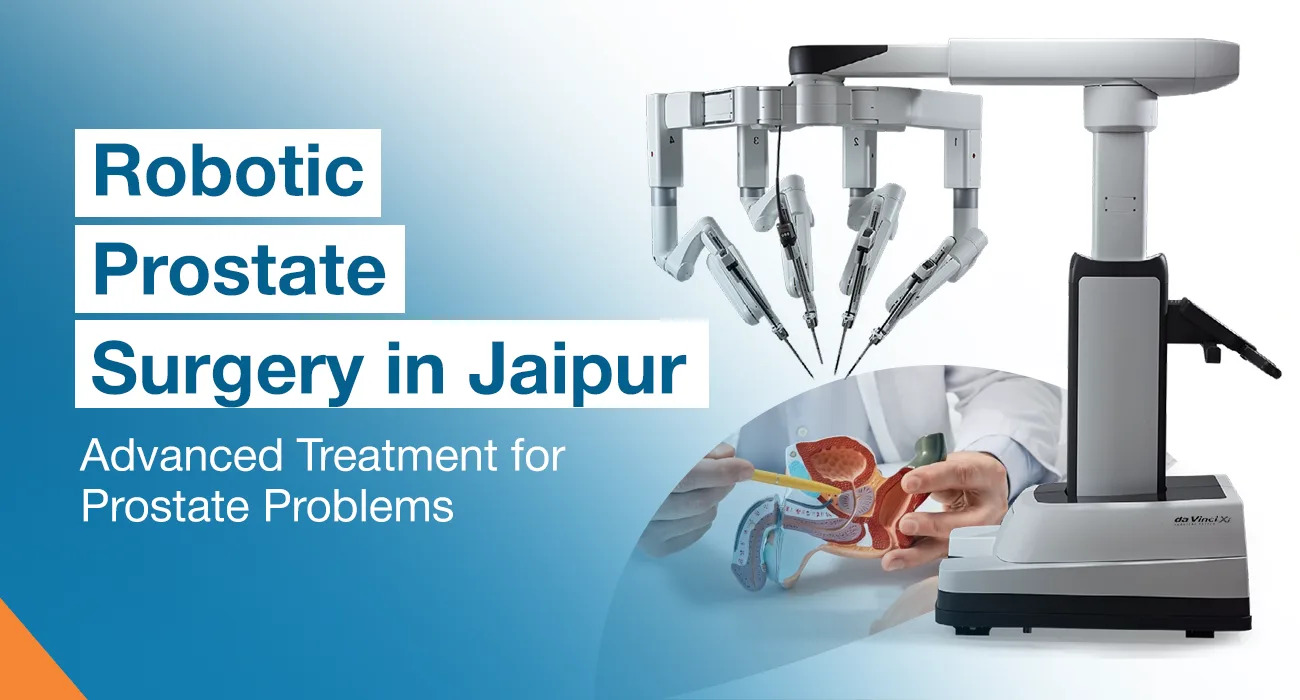
Robotic Prostate Surgery in Jaipur: Advanced Treatment for Prostate Problems
05/21/2026
Prostate-related issues can affect a man’s quality of life in many ways—from trouble passing urine and frequent nighttime urination to serious conditions like prostate cancer. Thankfully, medical advancements like robotic prostate surgery (also known as robotic prostatectomy) have now transformed the way prostate conditions are treated. It is a minimally invasive and highly precise procedure that offers faster recovery, less pain, and better health outcomes compared to traditional surgery.
Today, urology hospitals in Jaipur like Eternal Hospital are emerging as trusted centers for robotic prostate surgery in India. These hospitals offer advanced robotic technology, experienced urologists, and world-class healthcare infrastructure to ensure safer procedures, faster recovery, and improved clinical outcomes for patients.
Think of robotic prostate surgery like upgrading from using a paper map to modern GPS navigation.
Explore this detailed guide to know everything about robotic prostate surgery in Jaipur, including:
- Its benefits
- Patient’s eligibility criteria
- Recovery
- Risks of robotic prostatectomy
And you will also get to know: Why more patients in Jaipur are choosing robotic-assisted treatment?
Read Also: When Is Robotic Hysterectomy Recommended? Conditions & Eligibility Surgery
What Is Robotic Prostate Surgery?
Robotic prostate surgery, is also known as robotic-assisted prostatectomy or robotic prostatectomy.
It is a minimally invasive procedure performed by an experienced laparoscopic surgery team with the assistance of advanced surgical technology.
The surgery is commonly performed using the da Vinci Surgical System, where the surgeon controls robotic arms from a computerized console.
The robotic system offers:
- High-definition 3D magnified vision
- Exceptional precision and control
- Greater flexibility than the human hand
- Small keyhole incisions instead of large cuts
Unlike traditional open surgery, robotic-assisted prostatectomy comes with a three-dimensional endoscope and image processing equipment that allows your surgeons to operate with minimal damage to nearby tissues and nerves. The prostate is ultimately removed through one of the keyhole incisions.
Experts from medical institutions highlight that robotic prostatectomy often results in:
- less bleeding
- shorter hospital stays
- faster recovery
Read Also: Everything You Need to Know About Robot-Assisted Surgery for Gall Stone Disease
Types of Robotic Prostate Surgery
It may be done using different approaches, depending on the condition that needs treatment.
| Type | When used | What the surgeon removes | Key points |
| Robot‑assisted radical laparoscopic prostatectomy (RALP) | Prostate cancer (localized) | Entire prostate gland, sometimes surrounding tissue and nearby lymph nodes | Aims for cancer removal and may include lymph node dissection. |
| Nerve‑sparing prostatectomy | Prostate cancer when nerves are not directly involved | Prostate gland while attempting to preserve erectile nerves | Preserves nerves controlling erections when oncologically safe; may not be possible if cancer is close to nerves. |
| Simple robotic prostatectomy (partial prostatectomy) | Symptomatic benign prostatic hyperplasia (BPH) | Inner portion of the prostate; outer part left intact | Also called partial prostatectomy; relieves urinary symptoms of enlarged prostate without removing whole gland. |
Read Also: How Is Robotic Partial Nephrectomy Changing Kidney Tumor Treatment?
Why Robotic Prostate Surgery Is Becoming Popular in Jaipur
Jaipur has rapidly developed into a major healthcare hub for advanced urology treatments. Many hospitals in the city now offer robotic-assisted urology procedures performed by experienced surgeons trained in minimally invasive techniques.
Key reasons patients choose Jaipur include the following:
- Access to advanced robotic surgical systems
- Highly experienced urologists and uro-oncologists
- Affordable treatment compared to metro cities and international hospitals
- Modern hospitals with ICU and rehabilitation support
- Convenient connectivity across Rajasthan and North India
Patients from nearby states increasingly travel to Jaipur for robotic prostate treatment because it combines advanced care with cost-effectiveness.
Read Also: All You Need to Know About Robotic Radical Hysterectomy
Conditions Treated with Robotic Prostatectomy
Robotic prostate surgery is primarily used for:
1. Prostate Cancer
The most common indication is localized prostate cancer, where cancer remains confined to the prostate gland.
Robotic radical prostatectomy removes:
- The prostate gland
- Nearby tissues
- Sometimes nearby lymph nodes
Studies show robotic surgery offers cancer control outcomes comparable to open surgery while improving recovery experience.
2. Benign Prostatic Hyperplasia (BPH)
In men with very large enlarged prostates causing severe urinary symptoms, robotic simple prostatectomy may be recommended.
Symptoms may include:
- Weak urine flow
- Difficulty urinating
- Frequent urination
- Nighttime urination
- Incomplete bladder emptying
3. Complex Prostate Conditions
Some robotic approaches are used for:
- Recurrent prostate enlargement
- Complicated urinary obstruction
- Large prostates not suitable for TURP
Read Also: Robotic Hernia Repair: Faster Recovery, Less Pain & Better Outcomes
6 Benefits of Robotic Prostate Surgery
Robotic-assisted surgery has several important advantages compared to conventional open surgery.
1. Smaller Incisions and Less Pain
Only tiny keyhole incisions are needed, reducing:
- Postoperative pain
- Scarring
- Infection risk
2. Reduced Blood Loss
Robotic precision minimizes bleeding during surgery and lowers transfusion requirements.
3. Faster Recovery
Most patients:
- Walk within hours after surgery
- Return home within 1–2 days
- Resume normal activities sooner
4. Better Preservation of Nerves
The magnified 3D view helps surgeons preserve delicate nerves related to:
- Urinary continence
- Erectile function
5. Shorter Hospital Stay
Compared to traditional open surgery, robotic procedures usually involve shorter hospitalization and quicker rehabilitation.
6. Enhanced Surgical Precision
The robotic system filters hand tremors and allows highly accurate movements in narrow pelvic spaces.
Read Also: Robotic Hernia Repair: Faster Recovery, Less Pain & Better Outcomes
Who Is a Good Candidate for Robotic Prostate Surgery?
You may be a suitable candidate if you have:
- Localized prostate cancer
- Enlarged prostate causing severe symptoms
- Good overall health for anesthesia
- Desire for faster recovery
- Preference for minimally invasive surgery
Your urologist will evaluate:
- PSA levels
- MRI findings
- Biopsy results
- Prostate size
- Age and medical history
Not every patient requires robotic surgery, so personalized evaluation is essential.
Read Also: Robot-Assisted Surgeries in Urology: Revolutionization of Pyeloplasty & Nephrectomy
Preparing for Robotic Prostate Surgery
Before surgery, patients usually undergo comprehensive evaluation.
Common Preoperative Tests
- Blood tests
- ECG
- Chest X-ray
- MRI or imaging scans
- Urine tests
Medication Adjustments
Doctors may advise stopping:
- Blood thinners
- Certain supplements
- Smoking and alcohol
Lifestyle Preparation
Patients are encouraged to:
- Stay physically active
- Begin pelvic floor exercises
- Arrange support at home after discharge
Counseling about recovery expectations, continence, and sexual function is also an important part of preparation.
Read Also: Robotic Myomectomy for Fibroids: Fertility, Recovery & Success Rates
Step-by-Step Overview of the Surgery
Here are the general steps that experts can follow during the procedure:
- General anesthesia is administered.
- Small incisions are made in the abdomen.
- Robotic instruments and camera are inserted.
- The surgeon controls the robotic system from a console.
- The prostate is removed with extreme precision.
- The urinary tract is reconstructed.
If you are wondering about “robotic prostate surgery time duration” The surgery usually lasts between 2 to 4 hours depending on complexity.
Read Also: Robotic Ovarian Cyst Removal: Cost, Recovery & Risks
Recovery After Robotic Prostate Surgery
Recovery is generally faster compared to open surgery, though healing still takes time. The recovery is based on various factors like type and complexity of the condition and other individual factors.
Here is the general recovery timeline:
Hospital Stay
Most patients stay:
- 1–2 days after surgery
Catheter Use
A urinary catheter usually remains for:
- 5–14 days
Physical Activity
Patients are encouraged to:
- Walk early after surgery
- Avoid heavy lifting for 4–6 weeks
Return to Work
Many men return to desk jobs within:
- 2–3 weeks
Read Also: Robotic Heart Surgery in India: Benefits of da Vinci Xi for Complex Cardiac Conditions
Urinary Continence After Surgery
Urinary leakage or incontinence can occur temporarily after prostate surgery.
The good news is:
- Most men improve gradually over weeks or months
- Pelvic floor exercises (Kegels) significantly help recovery
Robotic surgery may improve continence outcomes because it causes less trauma to surrounding tissues.
Read Also: Uterine Prolapse Treatment Without Hysterectomy – Robotic Options
Sexual Function and Nerve-Sparing Surgery
One major concern for patients is erectile dysfunction after surgery.
Modern robotic systems help surgeons perform nerve-sparing procedures whenever medically safe. These techniques aim to preserve erectile function by protecting delicate nerve bundles.
Recovery depends on:
- Age
- Baseline sexual health
- Cancer extent
- Whether nerves can be preserved
Some patients recover within months, while others may take longer.
Risks and Complications
Although robotic surgery is highly advanced, no surgery is completely risk-free.
Possible complications include:
- Bleeding
- Infection
- Urinary incontinence
- Erectile dysfunction
- Urine leakage
- Blood clots
- Rare injury to nearby organs
However, studies consistently show robotic surgery may reduce certain surgical complications compared to open procedures.
Robotic Surgery vs Open Surgery
If you are wondering, “Is robotic prostate surgery better than traditional surgery?” the simple answer is both of the methods have their own importance; doctors in Jaipur may recommend any of the methods based on the situation.
Here is the general difference:
| Feature | Robotic Surgery | Open Surgery |
| Incision size | Small keyhole incisions | Large abdominal incision |
| Blood loss | Lower | Higher |
| Pain | Less | More |
| Hospital stay | Shorter | Longer |
| Recovery | Faster | Slower |
| Precision | High-definition robotic control | Manual surgery |
| Cosmetic outcome | Minimal scarring | Larger scar |
Multiple comparative studies report that robotic prostatectomy provides similar cancer control with improved postoperative recovery experience.
Cost of Robotic Prostate Surgery in Jaipur
The cost depends on:
- Hospital infrastructure
- Surgeon expertise
- Type of robotic platform
- Complexity of the condition
- ICU and hospital stay duration
Although robotic surgery may cost more than standard surgery initially, many patients consider the benefits worthwhile because of:
- Faster recovery
- Reduced complications
- Earlier return to work
Compared to international treatment centers, Jaipur offers significantly more affordable robotic surgery options. The cost can generally range from ₹2,50,000 to ₹7,00,000.
Questions to Ask Your Surgeon
Before surgery, ask:
- How many robotic prostate surgeries have you performed?
- Are you experienced in nerve-sparing techniques?
- What are my chances of urinary continence recovery?
- What complications should I expect?
- What is the estimated recovery timeline?
- Will I need additional treatment after surgery?
Choosing an experienced robotic urologist is one of the most important factors affecting outcomes.
Why Robotic Prostate Surgery Represents the Future of Urology
Robotic surgery is rapidly transforming modern urology because it combines the following:
- Precision
- Safety
- Faster healing
- Better quality-of-life outcomes
New advancements such as:
- Single-port robotic surgery
- Enhanced imaging
- AI-assisted surgical planning
- Improved nerve preservation
are expected to further improve patient outcomes in the coming years.
Experts in urology hospitals in Jaipur like Eternal Hospital focus on robotic approaches because they focus not only on curing disease but also on preserving normal life after surgery.
Conclusion
Robotic prostate surgery in Jaipur offers a modern, minimally invasive solution for prostate cancer and enlarged prostate treatment. With advanced robotic systems, skilled surgeons, and growing healthcare infrastructure, Jaipur is becoming a trusted destination for high-quality robotic urology care.
For many patients, robotic-assisted prostate surgery means:
- Smaller scars
- Less pain
- Faster recovery
- Better urinary control
- Improved quality of life
If you or a loved one is experiencing prostate problems, consulting an experienced robotic urologist can help you understand whether robotic prostate surgery is the right option for your condition.
If you are looking for advanced prostate care and a trusted urology hospital in Jaipur, contact Eternal Hospital. With experienced urologists, advanced robotic surgery technology, and recognized accreditations and affiliations, Eternal Hospital is a preferred destination for comprehensive prostate treatment in Jaipur.
Here is why we stand out:
- Awarded the gold seal by JCI
- Affiliated with Mount Sinai Hospital
- Facilitated with ACC for excellence in heart care
- Accredited with NABH for strict adherence to quality
- Accredited with NABL for testing and calibration laboratories
Our Address: Eternal Hospital, 3 A Jagatpura Road, Near Jawahar Circle, Jaipur 302017
Get expert advice by calling us at+91-9549158888
Our Expert:
Dr. Ravi Gupta, HOD & Director - Urology and Renal Transplant Surgery
FAQs
Q1: What happens after prostate removal?
A: After prostate removal, a catheter drains urine while healing begins; urinary control and recovery improve gradually over weeks, with follow-up appointments needed.
Q2: How long does pain last after a prostatectomy?
A: Pain after prostatectomy usually lasts a few days to two weeks, and mild soreness may continue longer, but medicines help control it. However, if the pain becomes severe, worsens over time, or continues beyond the expected recovery period, it’s important to contact your doctor for evaluation.
Q3: Can I climb stairs after prostate surgery?
A: Yes, you can climb stairs after prostate surgery, but only gently. Light stairs and walking are usually encouraged immediately after surgery.
Q4: How does a man pee after prostate surgery?
A: After prostate surgery, you pee normally through the urethra again, but a catheter drains urine first while healing; leakage may happen temporarily.