



Who Needs a TAVR Procedure? Signs, Eligibility & Benefits
10/08/2026
Heart (cardiac) problems rarely announce their arrival with loud warnings. Most of the time, they start silently-a little breathlessness while climbing stairs, unusual fatigue after a short walk, or chest discomfort that you may dismiss as stress.
But for many older adults, these symptoms may signal a serious condition known as aortic stenosis (or aortic valve stenosis), in which the heart’s aortic valve becomes narrowed and does not open fully. The valve condition can restrict or slow blood flow from the heart to the body.
When the valve becomes severely narrowed and symptoms such as chest pain, fainting, or shortness of breath appear, replacing the valve may become necessary. This is where the TAVR procedure has completely changed the way heart valve specialists treat severe aortic valve disease.
Unlike traditional open-heart valve replacement surgery, TAVR is a minimally invasive procedure that avoids large chest incisions. This option helps individuals recover faster and improve their quality of life significantly.
Think of it like repairing a damaged doorway without dismantling the entire wall around it-the old valve stays in place while a new valve is inserted inside it.
However, not everyone is eligible for this procedure. The decision to undergo TAVR is made after an extensive discussion among a team of doctors and surgeons who specialize in heart care. The team works together to determine the best treatment for each patient.
But who exactly qualifies for TAVR? What cardiac symptoms should you never ignore? And how do doctors decide whether someone is eligible?
Let’s break down all these questions in the simplest way possible.
What Is a TAVR Procedure?
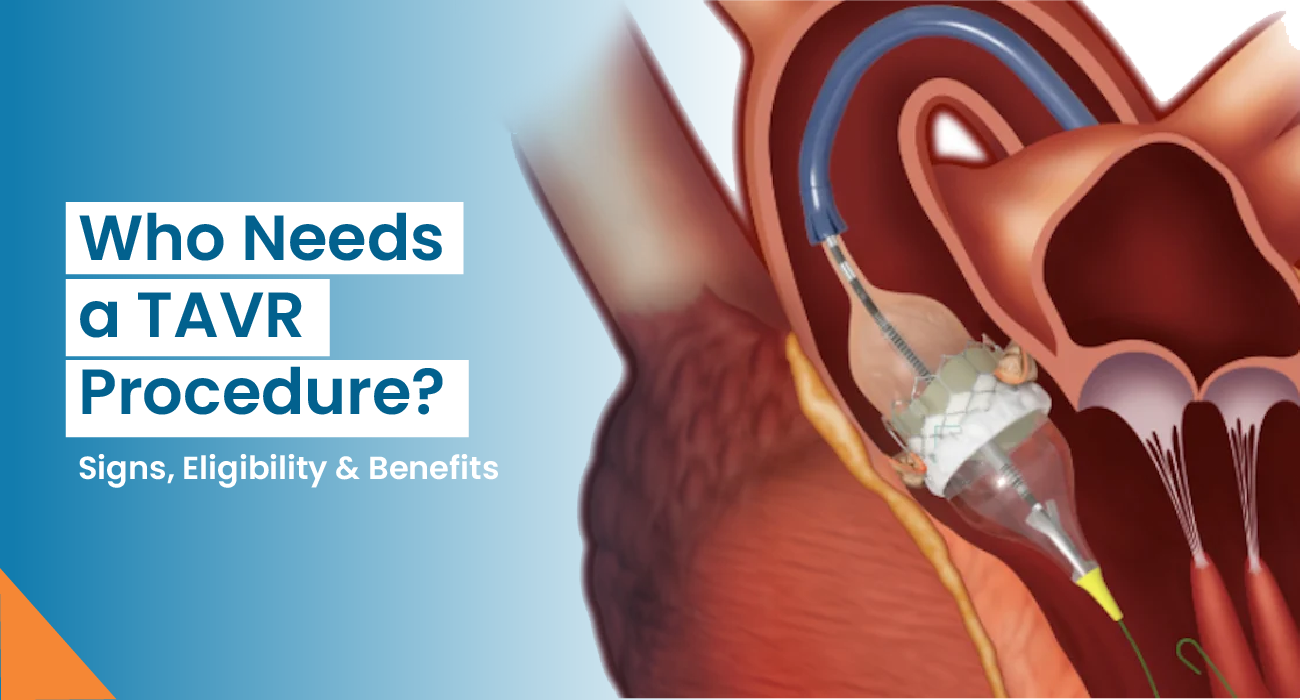
The TAVR procedure (Transcatheter Aortic Valve Replacement) is a minimally invasive treatment used to replace a damaged aortic valve without performing full open-heart surgery.
Instead of opening the chest completely, doctors insert a catheter, usually through an artery in the groin, and guide a replacement valve to the heart.
Once positioned, the new valve expands and begins working immediately.
Let’s Understand With a Simple Example:
Imagine placing a new pipe inside an old, rusted pipe instead of replacing the entire plumbing system. That’s essentially how TAVR works.
What is Another Name for TAVR?
Transcatheter aortic valve implantation (TAVI) is another name for TAVR.
Why Is the Aortic Valve Important?
The aortic valve controls blood flow from the heart to the rest of the body.
When this valve becomes narrowed due to calcium buildup or age-related damage, the heart has to work much harder to pump blood. Over time, this can lead to fatigue, chest pain, dizziness, heart failure, or even sudden cardiac death.
This condition is known as aortic stenosis.
This narrowing usually happens because of:
- Age-related wear and tear (especially over age 70) which can cause calcium buildup and/or thickening of the valve
- Rheumatic heart disease
- Bicuspid aortic valve
6 Common Signs Doctors Look For Before Recommending a TAVR Procedure
Many people ignore early symptoms because they develop gradually. Hence, watch out for the following symptoms for timely diagnosis and early intervention.
Watch for These Symptoms
| Symptoms | What It May Feel Like |
| Shortness of breath | Difficulty walking, climbing stairs, or doing light activity |
| Chest pain | Pressure or tightness during activity |
| Fatigue | Feeling exhausted even after minimal effort |
| Dizziness | Lightheadedness or fainting episodes |
| Swollen ankles | Fluid buildup due to poor heart function |
| Rapid heartbeat | Fluttering or an irregular pulse |
If these symptoms are becoming more frequent, a heart valve specialist may recommend testing for valve disease.
Who Is Eligible for TAVR?
Initially, TAVR was mainly offered to patients considered too risky for open-heart surgery. But today, the procedure is approved for low-, intermediate-, and high-risk patients.
Doctors evaluate multiple factors before deciding.
Here is the TAVR Eligibility Checklist
| Factor | Why It Matters |
| Severity of aortic stenosis | TAVR is mainly used for severe cases |
| Age | Often preferred in older adults |
| Surgical risk | Ideal for patients who may struggle with open-heart surgery |
| Overall health | Kidney disease, lung disease, or frailty matter |
| Heart anatomy | Imaging tests determine suitability |
| Previous valve surgery | Valve-in-valve TAVR may be possible |
A multidisciplinary team, including cardiologists, surgeons, and imaging experts, usually makes the final decision.
TAVR vs Traditional Valve Replacement Surgery (Surgical Aortic Valve Replacement)
One of the biggest questions patients ask is: “Should I choose TAVR or SAVR (Surgical Aortic Valve Replacement)?”
The decision is made by your doctor based on factors such as age, overall health, anatomy, and long-term treatment goals.
Comparison Table: TAVR vs Surgical Valve Replacement
| Feature | TAVR Procedure | Traditional Valve Replacement Surgery or SAVR |
| Invasiveness | Minimally invasive | Open-heart surgery |
| Chest opening | Usually no | Yes |
| Recovery time | Faster | Longer |
| Hospital stay | Often shorter | Usually longer |
| Anesthesia | Local or mild sedation possible | General anesthesia |
| Best suited for | Older or higher-risk patients | Younger, lower-risk patients |
| Scarring | Minimal | Larger chest scar |
For many elderly patients, the TAVR procedure can feel less physically demanding compared with traditional surgery.
Note: Both TAVR and SAVR have their own advantages, only your doctor can determine which option is best for you.
How Doctors Decide If You Need TAVR
A heart valve specialist uses advanced imaging and clinical evaluation before recommending the procedure.
Common Tests Before TAVR
- Echocardiogram (heart ultrasound)
- CT scan
- Coronary angiography
- Blood tests
- ECG
- Physical assessment
These tests help doctors:
- Measure the valve opening
- Assess calcium buildup
- Evaluate blood vessels
- Choose the right valve size
- Plan the safest access route
It’s similar to creating a detailed road map before starting a complicated journey.
Benefits of the TAVR Procedure
The biggest reason TAVR has become so popular is simple: it gives many patients a second chance at normal life without major surgery.
6 Major Benefits of TAVR
1. Minimally Invasive Treatment
Most procedures are performed through a small puncture in the groin artery.
2. Faster Recovery
Many patients walk within a day and return home much sooner than after open surgery.
3. Reduced Hospital Stay
Some patients are discharged in 24–48 hours.
4. Improved Quality of Life
Symptoms like fatigue and breathlessness often improve dramatically.
5. Suitable for Older Adults
Patients previously considered “too high risk” may now receive treatment safely.
6. Less Physical Trauma
The chest bone usually remains untouched.
What Happens During the TAVR Procedure?
Here’s a simplified step-by-step overview:
| Step | What Happens |
| Step 1 | A catheter is inserted through an artery |
| Step 2 | The catheter is guided toward the heart |
| Step 3 | The replacement valve is positioned |
| Step 4 | The new valve is expanded |
| Step 5 | The old valve is pushed aside |
| Step 6 | The new valve starts controlling blood flow |
If you are wondering “how long does the TAVR procedure take?”, the procedure generally takes 1–2 hours.
Are There Risks With the TAVR Procedure?
Like any medical procedure, TAVR also has risks.
Possible Complications
- Bleeding
- Stroke
- Infection
- Irregular heartbeat
- Need for pacemaker
- Valve leakage
- Blood vessel injury
However, newer-generation valves and improved techniques have significantly reduced complication rates over the years.
Recovery After a TAVR Procedure
Recovery is often smoother than with traditional valve replacement surgery, but proper follow-up remains essential.
6 Recovery Tips
- Take medications regularly
- Attend follow-up appointments
- Monitor wound healing
- Avoid smoking
- Follow a heart-healthy diet
- Start light physical activity gradually
Most patients go home within 1-2 days and return to normal activities within a week.
When Should You See a Heart Valve Specialist?
You should consult a heart valve specialist if:
- You experience unexplained breathlessness
- Walking short distances feels exhausting
- You faint or feel dizzy frequently
- You have known valve disease
- Your doctor hears a heart murmur
- Chest discomfort is becoming more frequent
Early diagnosis can prevent complications and improve long-term outcomes.
Is TAVR Suitable for Younger Patients?
This is one of the biggest discussions in cardiology today.
While TAVR is increasingly being used in lower-risk patients, long-term durability data for younger individuals are still evolving.
Doctors carefully weigh:
- Life expectancy
- Valve durability
- Future replacement needs
- Surgical suitability
For younger patients, traditional valve replacement surgery may still be preferred in some cases.
Future of TAVR, a Minimally Invasive Method
The future of the TAVR procedure looks incredibly promising.
Researchers are now exploring:
- Better valve durability
- Lower complication rates
- AI-guided imaging
- Improved stroke protection devices
- Valve replacement for other heart valves
TAVR is no longer considered an experimental treatment; it has become a mainstream option in modern cardiology.
Conclusion
The TAVR procedure has transformed the treatment of severe aortic stenosis. What once required major open-heart surgery can now often be treated through a minimally invasive approach with faster recovery and fewer physical limitations.
If symptoms like breathlessness, chest pain, fatigue, or dizziness are affecting daily life, they should never be ignored. The earlier valve disease is diagnosed, the better the treatment outcomes tend to be.
The best approach is to speak with an experienced heart valve specialist who can evaluate whether TAVR or traditional valve replacement surgery is the right fit for your condition.
Sometimes, the heart doesn’t fail suddenly- it whispers first. Listening early can make all the difference.
If you are looking for an advanced, minimally invasive TAVR procedure in Jaipur, consult the expert cardiac team at Eternal Hospital. With experienced heart valve specialists, state-of-the-art cardiac care technology, and comprehensive structural heart treatment facilities, Eternal Hospital is a trusted destination for TAVR and aortic valve replacement care in Jaipur. Eternal Hospital is also recognized for patient-centered care with a 4.7 rating from 12,819 Google reviews.
Here is why we stand out:
- Awarded the gold seal by JCI
- Affiliated with Mount Sinai Hospital
- Facilitated with ACC for excellence in heart care
- Accredited with NABH for strict adherence to quality standards
- Accredited with NABL for testing and calibration laboratories
Our Address: Eternal Hospital, 3 A Jagatpura Road, Near Jawahar Circle, Jaipur 302017
Get expert advice by calling us at +91-9549158888
Our Experts:
FAQs
Q1: Is TAVR safer than open-heart surgery?
A: For many patients, especially older adults or those at high risk, TAVR can be a safer, minimally invasive option. However, the right treatment depends on individual health factors.
Q2: How long does a TAVR valve last?
A: Current studies suggest that many TAVR valves remain effective for 8–15 years or longer, although long-term data is still evolving.
Q3: How long is recovery after TAVR?
A: Many patients recover faster than they would after open-heart surgery and may return home within a few days.
Q4: Can TAVR replace a failed surgical valve?
A: Yes. A valve-in-valve TAVR can sometimes be used to treat a previously implanted surgical valve that is no longer functioning properly.
Q5: Who should not undergo a TAVR procedure?
A: Patients with unsuitable anatomy, certain infections, or conditions requiring multiple heart surgeries may not be ideal candidates for TAVR.
Written and Verified by:

Dr. Prashant Dwivedi
Director & Incharge – TAVR and Structural Heart Disease Program and Senior Consultant Interventional Cardiology
Meet the doctor