



How to Reduce Blood Sugar Quickly in an Emergency at Home?
01/30/2025
High blood sugar (hyperglycemia) can turn into a medical emergency if not managed promptly, especially for people living with diabetes. At home, the key is to act quickly but safely: check your blood glucose, try simple, evidence‑based steps, and know when to call for emergency care. This guide explains how to lower blood sugar quickly in an emergency at home, while also highlighting long‑term strategies and when to seek help from experts such as the endocrinologists and diabetes care team at Eternal Hospital.
What Causes Blood Sugar to Spike All of a Sudden?
| Cause | Why It Raises Sugar | What You Can Do Beforehand |
| High‑carb/sugary foods | Rapid digestion → fast glucose rise | Choose low‑GI foods, control portions |
| Missed insulin/medication | Less glucose removal from blood | Set reminders, use a pill organizer |
| Stress or illness | Stress hormones block insulin action | Practice relaxation, treat infection early |
| Inactivity | Muscles use less glucose | Take short walks daily |
Before discussing how to lower blood sugar quickly, it's important to understand the potential causes of blood sugar spikes. Common triggers include excessive carbohydrate intake, missed insulin doses, stress or illness, and inactivity. Consuming too many refined carbohydrates and sugary foods can cause rapid increases in blood sugar levels, as these foods are digested quickly and lead to a spike in blood glucose, especially for those with diabetes.
For diabetic patients, missing a dose of insulin or other prescribed medications can lead to elevated blood sugar levels, as insulin helps regulate blood sugar. Stress or infection can also raise blood sugar levels by triggering the release of hormones like cortisol, which interfere with insulin effectiveness.
Additionally, a lack of physical activity can contribute to high blood sugar levels, as exercise helps regulate blood sugar by increasing insulin sensitivity. Understanding these triggers can help you recognize when blood sugar levels are likely to rise and how to prevent emergencies.
People also ask:
Q: “Can stress really raise blood sugar?”
A: Yes. Stress releases cortisol and adrenaline, which can reduce insulin effectiveness and raise blood glucose.
Q: “Why do infections spike blood sugar?”
A: Sickness and fever increase inflammatory hormones that interfere with insulin and make the liver release more glucose.
How to Lower Blood Sugar Immediately at Home
| Step | How It Helps | Things to Avoid |
| Hydration (water, herbal tea) | Dilutes glucose, supports kidney function | Sugary drinks, packaged juices |
| Light physical activity | Muscles use glucose as fuel | Strenuous exercise if sugar >300 mg/dL |
| Low‑glycemic foods | Slows glucose rise | White bread, sweets, mithai |
| Correct insulin (if prescribed) | Speeds up glucose removal | Adjusting dose without medical advice |
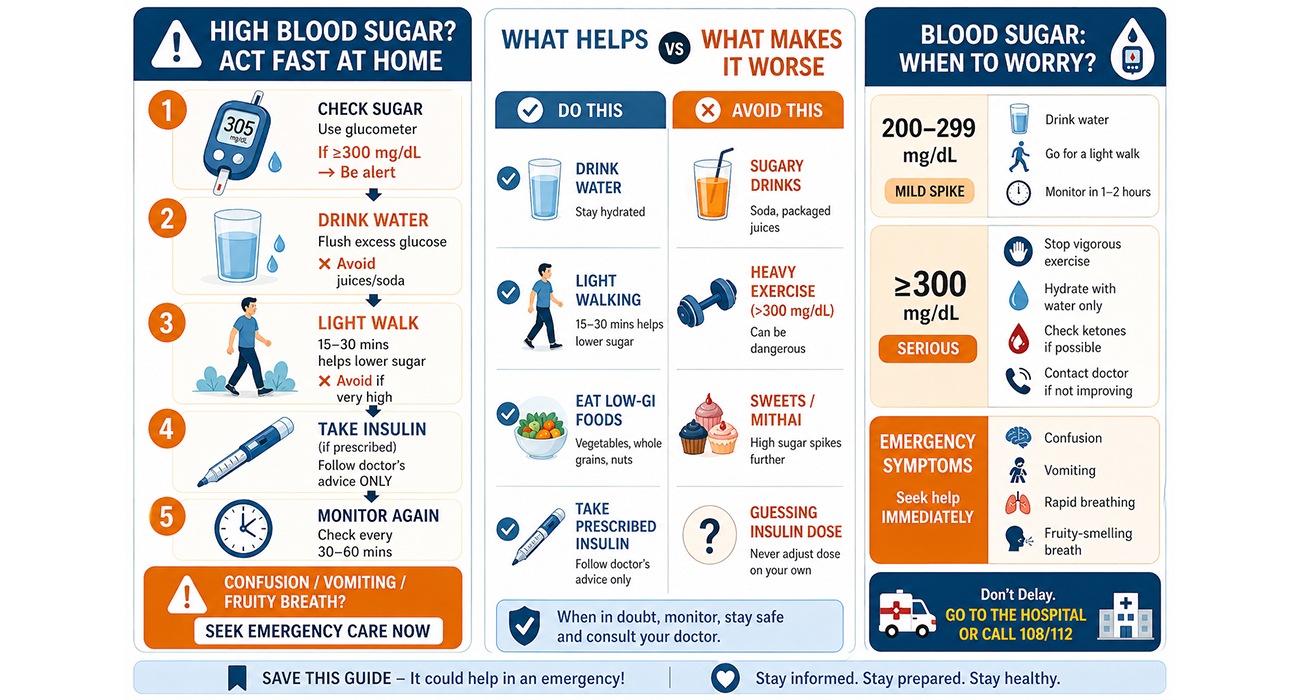
When blood sugar spikes, quick action is crucial. Drinking water helps flush excess glucose from the bloodstream, preventing dehydration and lowering blood sugar levels. Hydration can be particularly effective during high blood sugar events. Ensure you drink water regularly, especially when blood sugar is elevated.
Physical activity is another fast way to lower blood sugar. Exercise helps muscles use glucose for energy, quickly reducing blood sugar levels. Even light activities like walking or stretching can be beneficial. Regular movement aids in better glucose metabolism, especially during emergencies.
If prescribed, taking insulin can help manage high blood sugar quickly. Rapid-acting insulin works to bring blood sugar levels down effectively. Always consult your healthcare provider at Eternal Hospital for the right dosage. Adjusting insulin without professional advice can lead to complications.
Low glycemic index foods can stabilize blood sugar levels. These foods, such as leafy greens, nuts, and healthy fats, raise blood sugar slowly. In an emergency, avoid sugary or high-carb foods. Opt for these foods to keep blood sugar levels steady during a spike.
People also ask:
Q: “How fast can walking lower blood sugar?”
A: A 15–30‑minute walk can start lowering blood glucose within 30–60 minutes, depending on your starting level and fitness.
Q: “When should I not exercise during a spike?”
A: Avoid exercise if blood sugar is above 300 mg/dL or if you have symptoms like abdominal pain, vomiting, or fruity‑smelling breath, as these may indicate DKA.
Natural Remedies: Do They Work in Emergencies?
Some natural remedies may support blood sugar control, but they are not fast-acting emergency solutions.
Common options:
Apple cider vinegar
Cinnamon
Fenugreek seeds
| Remedy | How It May Help | Precautions |
| Apple cider vinegar | May improve insulin sensitivity post‑meal | Can irritate stomach; avoid if GERD; dilute well |
| Cinnamon | May improve insulin sensitivity | High doses may interact with liver or clotting medicines |
| Fenugreek seeds | Slows glucose absorption; may lower A1c | May lower blood sugar further; monitor closely |
These may improve insulin sensitivity over time but should not replace medical treatment during a spike.
If you're experiencing a spike in blood sugar, quick action can help bring your levels under control. Apple cider vinegar may help improve insulin sensitivity and slow down the rise of blood sugar after meals. Dilute one to two tablespoons of apple cider vinegar in water, and drink it to aid in lowering blood sugar. However, always consult your doctor before using any home remedies to ensure they don’t interfere with your prescribed treatment.
Cinnamon is another natural option known for its ability to help regulate blood sugar levels. It may improve insulin sensitivity and lower blood sugar over time. Adding cinnamon to smoothies, teas, or meals can be a simple way to include it in your diet for better control of blood sugar levels.
Fenugreek seeds are rich in soluble fiber, which can slow the absorption of sugar and help control blood sugar levels. Soaking the seeds overnight and consuming them in the morning is an effective, natural way to manage high blood sugar. Including fenugreek in your routine may help lower blood sugar spikes.
Limiting carbohydrate intake is essential during a blood sugar emergency. High-carb foods such as sweets, white bread, and sugary beverages can worsen a spike in blood sugar. Choose whole foods that are low in sugar to help stabilize your blood sugar levels and prevent further spikes.
People also ask:
Q: “Can apple cider vinegar replace medicine?”
A: No. It may support control but must be used as a supplement, not a replacement for prescribed treatment.
Q: “How much cinnamon is safe per day?”
A: Most guidelines suggest up to about 1–2 grams (½–1 teaspoon) per day; consult your doctor if you have liver issues.
Also, read: Different Types of Insulin for Effective Diabetes Treatment
How to Lower Blood Sugar in an Emergency at Home (Step‑by‑Step)
If your blood sugar shoots up and you feel unwell, follow this structured approach while arranging medical help:
- Check your blood sugar with a glucometer. If it is above 300 mg/dL, or if you have vomiting, confusion, rapid breathing, or fruity‑smelling breath, seek emergency care immediately.
- Hydrate slowly with water only; avoid sugary drinks.
- Take a short walk if you feel strong enough and your doctor has approved it. Avoid intense exercise if sugar is very high.
- Use insulin only if prescribed and within your doctor’s sliding‑scale Instructions: Do not guess the dose.
- Rest and relax; deep breathing or gentle meditation can reduce stress‑induced highs.
- Monitor every 30–60 minutes and call Eternal Hospital if sugar does not come down or you feel worse.
Table: Emergency vs. Mild Spike – What to Do
| Situation | Immediate Actions at Home | When to Call Eternal Hospital |
| Mild spike (200–299 mg/dL, no symptoms) | Drink water, light walk, low‑GI snack, monitor 1–2 hrs | Call if it stays high or you feel unwell |
| Severe spike (≥300 mg/dL) or symptoms | Stop vigorous exercise, hydrate, check for ketones if possible, prepare to go to ER | Call immediately or visit ER |
| Confusion, vomiting, fruity breath | Do not delay; seek emergency care instantly | Call 108/112 or go to nearest hospital |
People also ask:
Q: “What should I do if my glucometer shows ‘HI’?”
A: Treat it as ≥600 mg/dL; hydrate, avoid exercise, and seek emergency care immediately.
Q: “Can I sleep if my sugar is high?”
A: Only if it is mildly high and you feel fine; if it is very high or you have symptoms, stay awake and seek help.
How to Decrease Sugar Level Fast?
To reduce blood sugar quickly, try these simple steps. Take a brisk 30-minute walk to help muscles absorb glucose. Eat fiber-rich foods like vegetables and whole grains to slow sugar absorption. Manage stress with deep breathing or calming activities to prevent spikes. Regularly monitor your levels to stay informed and act promptly.
How to Reduce Sugar Level Long-Term?
| Habit | Weekly Goal / Frequency | Why It Helps |
| Balanced low‑GI meals | At least 70–80% of meals | Prevents sharp spikes |
| Walking or light exercise | 30 minutes, 5–7 days a week | Improves insulin sensitivity |
| Blood sugar checks | As per doctor’s plan (e.g., fasting + post‑meal) | Finds patterns early |
| Sleep and stress care | 7–9 hours; daily relaxation | Reduces stress‑related highs |
Managing blood sugar long-term is vital for avoiding emergencies. Follow a balanced diet with low-glycemic foods and avoid processed options. Regular exercise improves insulin sensitivity; aim for 30 minutes most days. Stay hydrated to help flush excess sugar and prevent dehydration. Prioritize 7–9 hours of quality sleep to support healthy blood sugar regulation. Consult healthcare professionals for tailored advice and proactive management.
People also ask:
Q: “Can a low‑carb diet prevent spikes?”
A: Yes, but it should be personalized and supervised; too low or poorly planned carbs can cause nutritional gaps or hypoglycemia.
Q: “How often should diabetics check sugar?”
A: It depends on your type and medication; many Type 1 patients check 4–6 times daily, while some Type 2 patients check 1–2 times daily or as advised.
Also, read: Diet Chart for Diabetic Patients: 7 Days Indian Meal
Conclusion
Knowing how to reduce blood sugar quickly in an emergency at home can prevent complications and keep you safe. However, it is essential to take proactive measures, including maintaining a healthy lifestyle, monitoring blood sugar regularly, and consulting healthcare professionals. If you experience persistent high blood sugar levels or if you’re unsure how to manage an emergency, contact Eternal Hospital.
Frequently Asked Questions (FAQs)
Q1. What are the signs of high blood sugar that require immediate attention?
A: Common symptoms of high blood sugar include excessive thirst, frequent urination, fatigue, blurred vision, and nausea. Severe cases may present as confusion, rapid breathing, or fruity-smelling breath, which require immediate medical attention.
Q2. How can I quickly reduce my blood sugar at home?
A: Quick methods to reduce blood sugar include drinking water, engaging in light physical activity, consuming low-glycemic foods, or taking prescribed rapid-acting insulin. Always monitor your levels and consult a doctor if they remain elevated.
Q3. Can apple cider vinegar help lower blood sugar?
A: Apple cider vinegar may help improve insulin sensitivity and lower blood sugar levels after meals. Dilute one to two tablespoons in a glass of water and consume. However, consult your doctor before trying home remedies.
Q4. Is it safe to exercise during a blood sugar spike?
A: Light to moderate exercise, like walking, can help reduce blood sugar by encouraging glucose uptake in muscles. Avoid strenuous activity if your blood sugar exceeds 300 mg/dL, as it can worsen the situation.
Q5. Can cinnamon or fenugreek seeds help manage blood sugar?
A: Cinnamon and fenugreek seeds are natural options that may help regulate blood sugar by improving insulin sensitivity and slowing sugar absorption. Use them as supplements under the guidance of a doctor.
Q6. When should I seek medical help for high blood sugar?
A: Seek immediate medical attention if your blood sugar exceeds 300 mg/dL, or if you experience severe symptoms like confusion, vomiting, rapid breathing, or unresponsiveness. Contact Eternal Hospital for expert care.
Q7. How can I manage blood sugar levels long-term?
A: Adopt a balanced diet with low-glycemic foods, engage in regular exercise, stay hydrated, and get sufficient sleep. Monitor your blood sugar levels regularly and consult healthcare professionals for personalized advice.
Q8. Why is regular monitoring of blood sugar important?
A: Frequent monitoring helps you identify patterns, adjust your lifestyle or medication accordingly, and act promptly to prevent emergencies. It’s a vital part of managing diabetes effectively.
Written and Verified by:

Dr. Deepak Chand Gupta
Associate Director - Endocrinology
Meet the doctor